Gosh, postpartum time can be tough. It’s not something that’s talked about too much when there’s so much excitement surrounding pregnancy.
They educate you on everything except postpartum care and what to expect.
After childbirth, Your body will be going through a lot but there are some ways you can minimize the pain and discomfort.
Below is a list that will help you get through your postpartum time just a little bit more comfortably.
We also have some pregnancy journals, Milestone Cards, And Closet Separators you can download and print a bit lower in the article, so look for that if you like nice things❣️
***Have You taken a prenatal birth course yet? Don’t have time? Here’s the best Premium online birthing course that you can take and it will teach you everything you need to know in a couple of hours.
By the way, this post contains affiliate links. As an Amazon Associate, I earn from qualifying purchases.
Postpartum Self Care- Things You Need To Know

You Give Birth Twice
Once your baby is born the work is not over. You still have to birth the placenta and while it’s softer it’s still quite uncomfortable. There’s plenty of rather intense cramping and they massage your extremely sensitive abdomen while you’re exhausted and want to be left alone.
Yet it has to be done. Usually, they’ll place the baby on your chest and that will help distract you from this extra pain but it won’t go unnoticed.
I had an epidural with each of mine and still felt the strange discomfort of them pushing deeply on my belly while the placenta was being birthed. It was like a dull aching all over despite the anesthesia.
The Tummy Massage
Once you have given birth and the whole ordeal is over they’ll need to massage your stomach. At this point, you’ll wish they’d leave you be, but it’s part of the process so they’re not done yet.
They do this because It helps your uterus shrink back down to the appropriate size.
It will cause a cramping feeling after they’re done.
**Have You taken a prenatal birth course yet? Don’t have time? Here’s the best Premium online birthing course and the first part of it’s totally free! You will learn absolutely everything you need to know and it will help tremendously so make sure you sign up. A Class is a must and I think the online ones are the best. Here’s a free Birth Planner Too!
Your Vagina Will Swell Huge
If you have a vaginal birth the experience is intense. You will be very swollen afterward, especially if your perineum tears when your child finally makes it through the birth canal.
It is common for the perineum to tear to some extent during most childbirths.
Tears can happen inside the vagina or other parts of the vulva, including the labia.
9 out of 10 mothers who have a vaginal birth will have some sort of tearing. They will sew the area up and it will swell after.
They often offer ice packs to sit on for a couple of days to reduce the access swelling. You may also want to sit on a donut pillow. Every new mother who has given birth should have one of these. It’s very comfortable and handy. It’s a must. Here’s a great one over on Amazon.
Someone will have to help you go To The Bathroom
Right after you give birth they will want you to urinate. This can be an uncomfortable experience. They will often have you stand on this rolling wheelchair where they have you hold onto a bar.
They want to make sure you can stand up and everything is functioning properly.
Pooping is Difficult
The first time you go after childbirth can be a scary experience. Everything is swollen and there’s a lot of trauma down there.
It just feels strange. After a few times though it doesn’t feel as painful.
Nobody tells you this while pregnant. Facing the bathroom can be a daunting experience after childbirth, period.
Breastfeeding is not nearly as easy as you thought
You’d really think that breastfeeding would be the most natural thing in the world for mother and child, but it actually takes skill.
This is why so many new mothers try and fail at it. They aren’t educated at all on what it takes to latch their baby on or what they have to do for success.
Some facilities have lactation consultants and some do not, which is pretty sad.
So it’s often up to you to learn what is necessary to succeed. You have to learn to latch properly, and you need to especially keep your baby on the breast most waking hours to stimulate the breast enough to bring in lots of thick, rich milk.
If you’re determined to succeed at breastfeeding, and I hope that you are, I highly recommend you take a quick breastfeeding course.
This will increase your chances of success greatly.
There’s a great online video course called Milkology that’s only $27 that will teach you everything you need to know in about 90 minutes. It’s the best breastfeeding course online, It’s quick and easy, and it gets rave reviews.
Nipple Cream is Your Friend
With breastfeeding comes very sore nipples. Especially at first. That first couple of weeks can be brutal but you can push through and they’ll be way less sensitive within the first month.
A great nipple cream or balm can make all the difference between success and simply not being able to stand it another minute. It’s a must-have for newly breastfeeding moms.
You’ll likely find that they get randomly sore off and on as well so it’s good to have it handy. Here is a nipple balm that is the answer to your nipple woes. You can thank me later.
You’ll Still Look Preggers
You may sort of already know this but you won’t realize just how much you still look pregnant until you’ve had your baby and you’ve barely changed.
Of course, this is not always true but it is for many. It can take months to get even close to what you were in the past.
Understanding this and being prepared is important. You can also have a game plan to regain your shape and fitness so that you feel like you have a little more control over the outcome.
The Postpartum Cure program is a great way to start.
The Postpartum Cure is a program designed to help get your body back to pre-baby shape as quickly as possible without losing your milk supply ( That can happen if you cut too many calories trying to get back into shape).
This program has diet information and plans, daily exercise programs and so much more. It’s very popular amongst postpartum women who need to get back into shape asap. You can take a look here.
She also has another program called “ The Pregnancy Health Program ” that helps you keep from getting too big during pregnancy. The quickest way to keep your shape during and after pregnancy is not over gain in the first place and that’s what this program is all about. You can see it here.
You will Have Cramps
The cramps are intense. They will come and go and they’ll feel a little bit like labor.
The first couple of days the cramps will feel like your Uterus is trying to tie itself into a pretty bow. But as the days pass, your uterus will shrink down and the cramping will become less and less.
I was surprised at the intensity of the cramping after each of my three children so be prepared.
You Will Bleed A Lot
This is something else you already surely know.
But it’s hard to grasp it until you’re going through it. There will be blood and lots of it.
You will likely pass large clots as well which will shock you. It’s not at all uncommon.
The doctors and nurses will brief you on what’s normal and what’s abnormal so you can know if and when to call the doctor.
Clots that are of a certain size out of the normal range warrant a visit to your doc asap.
You’ll Be Hungry As Hell
The hunger is real and food never tastes as good as it does right after you’ve birthed your baby. Remember my words here on this page when you dig into those first bites and you’ll know exactly what I mean.
I don’t know if it’s just all the exertion or your body’s desperate need to refill its stores that makes you so hungry and the food taste so rich, but it’s out of this world.
I still remember the first meals after each of my children. Food has never been as good as it was in those moments. Ever.
So plan for something magical, as a celebration of yourself and your baby’s birth.
You’ll Stink
After you have your baby you’ll get a very dramatic swing in hormones, as expected. One thing they don’t tell you much about is that you’ll smell very strongly.
It’s unpleasant but true. Even a couple hours after a good hot shower you’ll start to notice it.
This will go on for the first month or so after childbirth then slowly subside.
Your Hair Will Fall Out
I’m sure you’ve heard that you’ll have extra hair fall during your postpartum period. For some, it’s not too bad, but for others, it can be a lot.
Make sure to get blood work done if it seems accessive because your thyroid can go nuts during this time as well and you want to make sure something more serious isn’t going on.
After about 6 months or so your hair fall will normalize and grow into the normal hair phases of your pre-pregnancy state.
There will be tears and confusion
Postpartum is hard.. It’s one heck of a roller coaster both physically and emotionally. Your body kind of goes nuts after your child’s birth, and it will take a toll. No one is exempt.
The storm usually hits really hard about three days later and when it does, you’ll know. So you should mentally prepare for this.
Most pass through this trying time with success and see the light on the other side.
But for some women, it doesn’t go so well. This is when postpartum depression occurs. If you feel like you’re beginning to have trouble and those deep baby blues don’t seem to be passing it’s important that you talk to your doctor for both yours and your baby’s sake.
So those are the things you should know about postpartum. Below are tips that will help make everything a bit easier for you. This will help you be prepared for what’s ahead.
Vaginal Care-—
As we mentioned earlier, your vagina will be uncomfortable after childbirth. But there are products you can use and things you can do to help ease the discomfort.
First use ice. Ice is your best friend. You can get those Perineal ice packs to use. They will help tremendously at easing your pain. See them here.
You can also use a cooling perineal numbing spray like this one. This is definitely something you want to have on hand. This Earth Mama Perineal Spray has Benzocaine in it so it works really well.
It’s what I used and I highly recommend it.
A Peri Bottle to rinse with when you use the bathroom and Tucks Pads will help cleanse and soothe you as well.
What You’ll Need-
✅Incontinence Underwear
✅ Pain-Relieving Spray
✅Tuck’s Pads
✅Perineal Ice Pack
✅A Cleansing Bottle Or Peri Bottle
✅Pads
✅Healing Ointment
✅Nipple Balm
✅Gel Nursing Pads
✅ Donut Pillow
Postpartum is an exciting yet difficult time for a mother, especially with her first child. We hope that this information has made you feel a bit more prepared so you can enjoy the birthing experience and your baby as much as possible.
Good Luck!
Pin It On Pinterest For Later!
Bringing home a new baby is definitely a joyous occasion and a time to celebrate.
But with all the joy and excitement, there will inevitably be stress that takes a toll on you, and postpartum is one of those times.
As a new mama, you’ll have so much going on from your newborn to cooking, cleaning, and taking care of yourself. All this can greatly impact your well-being.
Keep reading to find out how you can combat your postpartum struggles and enjoy the moments with the new life you brought to this earth.
**Want Freebies For You And Your Baby? Get $330 Worth Of Gear! I have partnered with many companies to give you the best baby freebies online including Nursing Pillow, Pregnancy Pillows, Nursing Covers, Baby Leggings, Baby Clothes and so much more. You can find out how to get your freebies in this post right here.
**This post may contain affiliate links at no cost to you.
How To Deal With Postpartum Issues
Pin It On Pinterest For Later!
Postpartum Physical Changes
It isn’t unusual to feel insecure and worried about your appearance after giving birth.
Your body is going through massive changes that can be really overwhelming.
Below are the three most common postpartum physical changes:
Postpartum Acne
A common struggle that impacts physical appearance is postpartum acne.
These acne breakouts are caused by the changing levels of hormones, especially progesterone.
Acne flare-ups are different for everyone, some can be temporary while others can be long-lasting. Usually, acne appears around the lower region of your face, like the chin and jawline.
Luckily these breakouts can be addressed to an extent by incorporating a solid acne treatment into your everyday routine.
Topical acne treatments that have retinoids can be prescribed through a telehealth service to help your stubborn, severe, and painful pimples go away. But only begin using Retinoids if you are bottle-feeding your baby.
Breastfeeding while using retinoids is not safe and should only be used once breastfeeding has been discontinued.
Make sure to read the ingredients list before using certain acne treatments and double-check with your healthcare provider that the ingredients are okay to be used after pregnancy.
****A Quick Note to you– Postpartum is generally very hard on your body. It can be painful. Here’s a post you should definitely read that will help you navigate this uncomfortable time in a much more comfortable way.
Stretch Marks
Another noticeable change you might see after pregnancy is stretch marks.
Stretch marks often appear on the belly, breasts, and bottom area and are caused by the expansion of growth by the baby.
Some may consider stretch marks as a “badge of honor.” Stretch marks do symbolize your nine-month journey of pregnancy and they are not something to be ashamed of.
However, it is understandable if one does not want their stretch marks to be visible.
Read More:
Stretch marks can fade away, however, they do not fully disappear.
You can try to moisturize your stretch marks with cream so they do not feel dry and irritated. Because using cream to moisturize your stretch marks is not guaranteed to get rid of your “battle scars,” laser therapy is a great alternative option.
Laser therapy treatment helps to restore the lack of elasticity in the skin and can change the pigmentation of the stretch marks. This is something you should consider to help reduce the appearance of your stretch marks if they really bother you.
Baby Weight
Gaining baby weight is another physical change that can cause a lot of insecurity in new mamas.
Women gain about 25-35 pounds during pregnancy and lose about 13 pounds of baby weight within the first 6 weeks of postpartum.
The rest of the weight during pregnancy, oftentimes, takes a lot of work to burn off. Instead of dieting, follow a nutritious meal plan with designated times for exercise.
Try incorporating movement into your daily routine that you enjoy, like walking. Walking is a great way to still spend time with your newborn.
You’ll get much-needed sunshine and fresh air too and that will do you a lot of good.
There’s also a great course called the Postpartum Cure that can really help you get back into your previous shape quickly. It comes with an app too and we highly recommend the program.
Mental Health Struggles
Since the beginning of your pregnancy, you’ve gone through massive hormonal shifts.
Hormones continue to change after birth during postpartum and this can make you feel very emotional and exhausted.
One of the reasons for this is that progesterone drops dramatically after giving birth.
This hormonal shift is difficult for the first month or so but over time you come to a baseline that will stay level until you finally get your next menstrual cycle.
If you’re breastfeeding your next cycle could be delayed anywhere from 6 months to a year and a half, depending on the length of time you choose to nurse.
Another hormone that can cause symptoms of baby blues is prolactin.
Prolactin is responsible for producing milk and also affects your dopamine levels. Prolactin can be the underlying reason for mood swings and low energy.
Luckily all that Oxytocin, the love hormone will help offset some of the mood instability you feel.
Baby Blues
A common feeling most moms have after giving birth is called baby blues. Baby blues is the feeling of sadness after pregnancy.
Baby blues is a normal side effect of hormonal changes after giving birth and usually passes within the first few weeks of postpartum.
The sudden drop of hormones like estrogen and progesterone can cause mood swings as we mentioned before. Feeling moody, sad, irritable, or anxious are all signs of baby blues.
If these symptoms extend past a couple of weeks it’s important to reach out to your health care provider and discuss the possibility of having postpartum depression.
Postpartum depression is a bit more severe than baby blues and may require treatment.
Postpartum Depression
One of the most common struggles moms deal with after giving birth is postpartum depression. According to the Office on Women’s Health, “Postpartum depression is a serious mental illness that involves the brain and affects your behavior and physical health.”
Postpartum depression can be very difficult and it can greatly affect the mental state of new mamas.
But postpartum depression doesn’t just affect new mothers. Many moms struggle with mental health challenges after giving birth to a second or third child and it can last months.
Persistent feelings of depression, helplessness, guilt, irritability, and loss of interest in things are all effects of dealing with postpartum depression.
If you feel like you are having symptoms of postpartum depression talk to your healthcare provider immediately.
Postpartum Psychosis
Another mental health struggle that women sometimes, experience, although rarely, is postpartum psychosis.
Postpartum psychosis symptoms can include hallucinations, delusions, paranoia, and rapid mood swings. Postpartum psychosis must be assessed and treated appropriately by a medical professional.
Mothers suffering from this mental illness should be quickly treated. It’s important to reassure mamas that they are not alone in the symptoms they are feeling and there are plenty of professionals and resources available to help.
Stress
It’s no surprise that giving birth and taking care of your newborn can cause a lot of stress.
Because of the stress and long laundry list of things you need to do, self-care can be neglected.
Make sure you consider this, get help with tasks, and take care of yourself as well as your baby.
Prioritizing Self-Care
Self-care can easily be brushed aside if it is not prioritized.
Doing anything that allows you to step away from your stressors is a good self-care practice.
Self-care doesn’t have to be extravagant, it can be as simple as reading a book or doing a five-minute meditation.
So take a few moments to schedule some time for yourself.
Asking for Help
Asking for help can be difficult for some, but it is a great way to relieve some of the stress falling on your shoulders.
Many people, especially new moms, want to feel capable and strong by being able to complete tasks on their own. Dealing with a new baby, finishing chores around the house, and taking care of yourself can be a lot to handle.
However, when you’re suffering from postpartum struggles it’s crucial to have a support system. Join a support group on Facebook, lean on your friends and family or confide in a therapist.
It’s important to get the help you need so you can still enjoy your time with your child.
In the end..
There is help available for mamas struggling with postpartum depression and other postpartum struggles.
It’s important to remember that you are not alone in this journey and that you are a strong and capable mother who brought another life into this world.
Make sure to have a solid support system that can lift you up and encourage you to keep going if things become difficult.
Good luck!
Pin It On Pinterest For Later!
So you had a baby and now you’re hurting down there. Bummer…. I know it hurts, I’ve been there.
I’ve had three babies and it feels a bit like your insides have been turned inside out. Not fun at all.
Your recovery period will be around 6 weeks no matter what and you’ll experience the most pain during the first week, but you can help things along. Here’s a post on things no one tells you about during postpartum. It’s a good read, you should check it out.
You’ll have pain and symptoms during your postpartum like sore nipples, backaches, and perineal pain that will likely continue for weeks.
You’ll also be exhausted as your body begins to heal and you’ll feel like you’ve been hit by a truck. True story.
But there are things you can do to help yourself heal faster and that’s what we’ll discuss in this article today.
**Want Freebies For You And Your Baby? Get $330 Worth Of Gear! I have partnered with many companies to give you the best baby freebies online including Nursing Pillow, Pregnancy Pillows, Nursing Covers, Baby Leggings, Baby Clothes and so much more. You can find out how to get your freebies in this post right here.
By the way, this post contains affiliate links at no extra cost to you. As an Amazon Associate, I earn from qualifying purchases.
Ways To Heal Faster After Vaginal Childbirth
Below we’ll discuss all the things you can expect to experience and what to do about it.
Abdominal pain
After your little one is delivered your abdomen is going to ache quite a bit.
During this time the uterus contracts and shrinks back to its normal size.
This will cause some lower abdominal cramps that are known as afterpains.
These pain typically feel a good bit like menstrual cramps only stronger.
They can last a few weeks for some women but usually, decrease after the first week.
If they become severe, you should contact your healthcare provider for an evaluation.
Fluctuating Hormones
The hormonal rollercoaster that comes after childbirth can be really intense and there’s not a lot of education or talk about the subject throughout pregnancy.
So even though you intuitively know that these things will occur it can really take you by surprise.
So here’s what happens with each of the main female hormones immediately after childbirth:
Progesterone drops off literally the second after you birth the placenta while prolactin begins to rapidly increase.
Your ovaries will not start creating progesterone again until your first menstrual cycle, which will create moods, anxiety, and all kinds of other weird symptoms. It’s not comfortable, I can tell you from experience.
Once your progesterone goes down your Prolactin will shoot sky high.
But there’s a feedback loop with Prolactin and the brain neurotransmitter Dopamine.
When your Dopamine is high your prolactin goes down so there will be these fluctuations within your body.
Dopamine will go down so that Prolactin can go up and as a result, prolactin can sometimes be the reason behind moodiness, low energy levels, and slowed metabolism after your baby’s birth.
Your Estrogen is your feel-good feminine hormone and it will suddenly drop significantly too.
All this happening inside you combined can feel pretty crazy and that’s where all those dreaded after childbirth moods and tears come from.
It’s not easy my friends…
**Read: What to expect the first 24 hours in the hospital after your babe is born
Baby Blues
On the same note as the hormone fluctuations come the full-blown baby blues.
The baby blues are natural though and happen to every new mama to a certain extent.
But sometimes things can take a turn for the worst and you end up with Postpartum Depression.
Postpartum depression is a serious, but treatable illness involving feelings of extreme sadness, indifference, anxiety, as well as changes in energy, sleep, and appetite.
It can be dangerous for both mother and child so if you feel like your ‘ baby blues ‘ is progressing to something much deeper and more profound you should speak to your health care provider immediately.
Constipation
So you were constipated during pregnancy, you pooped on the table ( or not if you’re particularly lucky ) and you thought you’d be done with it.
Well, not quiet. You still may have a ways to go, unfortunately.
Constipation is a normal discomfort that can be caused by several factors related to what’s happening to your body before, during, and after you give birth.
Some of the causes of constipation after childbirth are C-section, Damage to the anal sphincter or pelvic floor muscles, Dehydration or lack of fluids, Hormonal changes, Perineal pain, Using pain medication or epidural during labor, and more.
So yeah constipation continues on… but it will be gone before you know it so hang in there!
****If you’re still pregnant but haven’t taken a birthing class yet, there’s a great online course by Hilary Over at Pulling Curls. She’s a nurse and this is the best birthing class online today and at a great price point and part of the course is totally free. Have a look here. You can also get a free birth plan right here.
Hemorrhoids
With all the continued constipation often comes Hemorrhoids.
It’s not always so bad but for some women, it can be pretty terrible.
However, the problem usually clears up on its own within about a 6 week period after birth.
You can use a good hemorrhoid cream to relieve some of your discomforts and sitting on a donut pillow like this one will help with perineum soreness and hemorrhoids. I highly recommend you get one!
Perineum Soreness
If you had a vaginal birth, your perineum (the area between the anus and the vagina) will be really sore.
The initial soreness will take about 6 weeks to heal and then after that, you’ll be tender there for months.
But it will subside over time so be patient.
If you had an episiotomy or perineal tear it will likely take a bit longer.
Initial healing will take a couple of months under these circumstances and the soreness will last for a good bit.
Again, having that donut pillow I mentioned in the section above will work wonders to keep you comfortable.
Sore nipples and Breasts
During your first two weeks after childbirth whether you’re breastfeeding or not, your breasts and nipples will be inflamed and painful.
This is due to all the prolactin surging through your body so that you can feed your new babe.
Your milk will come in and your breasts will likely swell, harden and become more tender.
What you’re experiencing is postpartum breast engorgement, and it’s perfectly normal.
If you are breastfeeding the swelling will subside when your baby really learns to latch and suckle well.
However, the nipple pain will continue for the first month.
It will burn for about 10 seconds each time your little one latches on. This can be very painful but it does subside within seconds and of course, breastfeeding your baby is so worth that first bit of initial pain.
Stitches
You’d think stitches were only for C-sections births.
But if you had vaginal tearing you’ll have to deal with them under these circumstances as well.
After delivery when tearing occurs, the doctor or midwife usually closes the perineal tear with stitches.
The stitches will dissolve in 1 to 2 weeks, so they will not need to be removed.
They can be uncomfortable to sit on so you’ll need that donut pillow to keep you comfy and happy!
Vaginal Discharge
After your baby is born, your body gets rid of the blood and tissue that was inside your uterus. It’s sorta like a very heavy period.
You can get all kinds of crazy clots and stuff too. It can all be intense.
This afterbirth discharge is called lochia.
For the first few days, it’s heavy, bright red, and clotty.
Over time, the flow gets less and lighter in color.
This can last for weeks or even a month or more.
Another rather unpleasant side effect of all that is that you can have an odor down there.
There’s a wound in your uterus where the placenta has detached and a lot of healing will be going on. With any healing process can come odors and this is no different.
If it gets too strong or overwhelming you should discuss it with your doctor.
Body Odor
During the postpartum period, you have heavy hormonal shifts that will cause you to have a stronger body odor.
Your body is detoxifying and you’ll sweat a whole lot more.
It’s a stinky and uncomfortable process. But it’s unavoidable.
You should just bathe more often and within a 6 week period, everything will finally begin to calm down.
Water retention
Swelling is common during postpartum.
It will be at its worst during the first postpartum week.
But it will gradually improve over time.
The swelling is caused by an accumulation of fluid in certain parts of your body.
Staying hydrated will help your body have an easier time releasing extra fluid that causes swelling.
Walking around and getting really light exercise and movement will help as well but don’t overdo it during those first weeks. It’s ok to rest!
Things to consider:
- Postpartum hemorrhage can sometimes occur.. If your bleeding seems extremely heavy you should contact your doctor right away. Without treatment, postpartum hemorrhage can be fatal.
- Headaches that are severe and don’t go away can also signal an underlying problem, especially coupled with high blood pressure. You could be in danger of having a stroke.
- Deep vein thrombosis (a blood clot in a deep vein) is an uncommon problem (1 in every 1,000 pregnancies) that sometimes occurs after pregnancy. Symptoms include leg pain or feelings of a strained muscle or charlie horse. Your leg may also be red and hot as well. Left untreated, these clots can break away and travel to your lungs. This condition can be life-threatening so if you’re having these symptoms contact your health care provider right away.
- Postpartum preeclampsia is rare and can develop within 48 hours after childbirth or as late as six weeks after childbirth. It is similar to preeclampsia (also called toxemia), which can occur while you’re pregnant. This can cause your blood vessels to constrict. This can lead to high blood pressure and other issues. Sometimes there are no real symptoms unless you are monitoring your blood pressure. When you do have symptoms, they may include severe headache, swelling of your hands and feet, blurred vision, pain in the upper right portion of your body, and sudden weight gain. If you have any of these symptoms you should contact your doctor immediately.
Reasons To Contact Your Doctor During Postpartum:
If you have any of these postpartum symptoms, call your doctor immediately.
- Heavy vaginal bleeding that soaks more than one pad per hour or vaginal bleeding that increases each day instead of getting less.
- Passing large clots.
- Chills and/or a fever of more than 100.4°F.
- Changes to your vision or a severe headache.
- Painful urination or difficulty urinating.
- Heart palpitations, chest pain, or difficulty breathing.
- Vomiting.
- The incision from C-section or episiotomy is red, weepy, or swollen.
- Abdominal pain that is getting worse instead of better.
- Sore breasts that seem to go out of the scope of engorgement. For instance, one area being particularly red and swollen.
- Pain in your legs with redness or swelling.
- Increase in swelling throughout the body.
In the end..
During your postpartum healing period, you’ll experience a lot of physical and emotional changes, and some may surprise you no matter how prepared you are.
But you’ll get through all the discomfort and you’ll have your sweet baby to keep you preoccupied throughout it all.
Before you know it you’ll feel great and all the hard stuff will be behind you and you can look forward to making memories with your new sweet baby.
Good luck to you mama!
Pin it on Pinterest For Later!!
I’m going to tell you something today about healing your postpartum body, and I want you to listen close.
There’s a lot of advice online but for some reason what I’m going to tell you gets left out a lot. Maybe because some women think it’s old fashion or it doesn’t work.
Or maybe because no one thought to tell you or they just didn’t know, like me.
No one told me and I really wish they had because I can’t go back now without surgery and I’m sad ;(
Quick Note: Make sure to read to the end of the post and watch the super funny video below. It really puts a funny spin on pregnancy.
**This post may contain affiliate links at no extra charge to you;) This helps keep our blog up and running so that we can bring you educational and entertaining information like this. Thanks.
So at this point, you’re probably wondering what the hell I’m talking about.
Well, let me tell you and be sure to hear me out.
You NEED to wear a postpartum girdle or corset thingy, whatever you want to call it. Here’s a good choice.
This will help you heal your Diastasis recti by literally allowing your stomach muscles to grow back together.
So you’re asking, ‘ Toni, What is this Diastasis recti you’re talking about?’
Diastasis recti is the partial or complete separation of the rectus abdominis, or “six-pack” muscles, which meet at the midline of your stomach.
Diastasis recti is very common during and following pregnancy and it occurs in more than 75% of women to some extent!
That’s huge! So you wonder why women who lose all the pregnancy weight still have a poochy tummy right? This is why!!
They workout and try SO HARD and it just won’t get better.
That’s because those muscles stayed separated and no amount of exercise will help if you leave them separated and unwrapped after birth.
I am one of those women. I have had three babes and I really wish someone had told me to put on a girdle and pull it all back together!
Because they will literally grow back into place if you do this and be consistent.
I discovered this because I met someone who had six beautiful babes over her mothering career and her stomach was as flat as a washboard.
** One more quick note: A postpartum fitness program is a good idea too if you’re very serious about snapping that body back. The Postpartum Cure. The Postpartum Cure is an excellent choice and used by millions of women with great results.
I ask her how the heck she managed that and she told me she wrapped her stomach and wore a girdle every time. She told me her mother taught her how and that her mother also had several children and a flat tummy.
So I’m a pregnancy blogger and I reached out and talked to MANY mothers after hearing this. I did my research and you know what?
Those mamas who had inherited this sound advice from their own mamas had nice flat tummies. Even women with a bigger build were able to go back to their original firmer shape.
***Related Posts:
- How To Survive Postpartum Pain Without Crying!
- What Nobody Tells You About The First Few Weeks Postpartum ** A Must Read **
- What To Expect The First Week Home With Your Newborn
- Postpartum Survival Kit | Everything You Need To Minimize Your Pain
- 7 Things You Can Do To Prevent Sagging Breasts After Breastfeeding
And knowing all this now… I can’t believe more women are not talking about it.
I will certainly be letting my daughter know when she gets ready to have her own so she doesn’t have to look four months pregnant for the rest of her life like most of us women who have had babies.
So the moral of this story is….. wrap your stomach so those muscles can grow back together.
Belly Bandit is the best source of professional grade maternity and postpartum garments and I highly recommend them. You will not find the same level of quality and support anywhere else.
Here’s a link so you can check out all the awesome stuff they have to offer.
And while you’re at it you should get a belly support if you’re still pregnant. This will also help your muscles and provide much-needed support. This would be the first step to protecting your belly from becoming a stretched out balloon after birth.
Before you go, be sure to watch the super funny video below. It will crack you up! I love the Belly Bandit company, they are hilarious.
I wish you all the best!
Pin It On Pinterest For Later!
Most mamas feel like they’re ready to bring the baby home after those few days at the hospital. You prepared yourself and your home and everything seems in order.
But I can tell you from experience that despite all your preparations you can and will feel very overwhelmed.
You learn so much about pregnancy and childbirth before the baby comes but a lot of what comes after just gets left out and you end up feeling stressed out and lonely.
**Read: What to expect the first 24 hours in the hospital after your babe is born
I want to put everything into perspective in this post and help prepare you just a little bit more. I think it will do you good.
***Just a note: I really enjoyed writing this article for you. I think it’s extremely helpful in painting a real picture of what it’s like during that first week and what you should expect. It also allowed me to tell my story and reminisce about my three babies and I appreciate that. I hope you enjoy it and find it very helpful!
By the way, this post contains affiliate links at no extra cost to you. As an Amazon Associate, I earn from qualifying purchases.
What To Expect The First Week Home With Baby
Pin It For Later On Pinterest
First Let’s Talk About What You’ll Experience Than We’ll Move On To What To Expect With Your Babe~
The Ride Home Can Be Rough
If you’re especially lucky your baby will sleep on the ride home from the hospital, but very often your new sweetie will cry most or the whole way home.
They cry because they’re nervous in the change of environment or just to relieve stress and that’s ok. Just soothe your baby with soft music and quiet voices.
A screaming baby can be stressful for new parents who are already tired but you’ll soon be home so just take a deep breath and try to relax.
All three of my sweet ones cried as hard as they possibly could on the 45-minute drive home and I was an absolute wreck by the time we finally made it. It sure seemed like the longest ride ever and all I wanted was for my babies not to be scared.
A Quick Note: I would love if you’d join our Facebook group! Come ask me questions about pregnancy, breastfeeding or being a mama, or get support from other mamas. Join us here!
Hopefully, your ride will be short and sweet and filled with zzzs.
****If you haven’t taken a childbirth prep test I HIGHLY recommend you do. Here’s an online course you can take in 3 hours or less at home.
You Will Miss The Hospital
Once you get home it seems so foreign. After all, everything has changed and you’re truly a different person. Even though you know your home well and you are comfortable there, things are just different, and being at the hospital with so much help was very useful.
You will start to worry about all the things. You will miss the staff. While you were there you could ask them questions and they helped with everything. It was a bit like a clinical bed and breakfast.
This happened with each of my babies births and I learned to appreciate that hospital stay just a little bit more each time.
**Want Freebies For You And Your Baby? Get $330 Worth Of Gear! I have partnered with many companies to give you the best baby freebies online including Nursing Pillow, Pregnancy Pillows, Nursing Covers, Baby Leggings, Baby Clothes and so much more. You can find out how to get your freebies in this post right here.
I have talked to other mothers and they say they often felt the same way, so enjoy those two or three nights, eat good food, and relax while you’re there.
Making sure you have help when you get home can ease the transition a bit so you’re not as overwhelmed. We’ll talk more about that later.
You’ll Be Really Uncomfortable
I’m going to level with you. The postpartum time is very painful and it sucks. Whether you’ve had a vaginal birth or a c-section you’ll be pretty uncomfortable most of the week.
Everything down there is swollen three times its normal size and many women end up with stitches.
You should be prepared for this. Most women don’t even think about it until the baby is born and they’re experiencing it. It’s like we forget all about the consequences birth will have on our own bodies.
But there are a few things you can buy that will make things much more comfortable for you. I have listed them below and if you want to read more about postpartum pain and what to expect you can read this article right here.
Donut Pillow
Incontinence Underwear
Pain Relieving Spray
Tuck’s Pads
Perineal Ice Pack
A Cleansing Bottle Or Peri Bottle
Pads
Healing Ointment


**Speaking of Your Postpartum body, if you’re worried about getting your body back and losing the baby weight I recommend the program The Postpartum Cure. It’s very popular and it’s helped many mamas lose weight, and flatten their tummy back out all while increasing their milk supply. It’s an excellent option if you want to get back to your shape quickly and safely. Here’s a link if you want to check it out.
You’ll Feel Sad And Strange
Gosh, I can’t even describe it. You just feel really weird that first week home. The second I came in the door I wanted to burst into tears yet I was elated in every way at the same time.
But I felt super sad too if that makes sense. I know it doesn’t really.
You just need to know that it hits you like a wrecking ball hard and fast and it’s not fun. You’ll be on the rollercoaster ride of your life that first week. Forget your mood swings during pregnancy.
While pregnant your hormones go up at a steady, slowish pace after the first trimester. But once you have the baby your body is flooded with the most intense changes. It’s like being hit by a tsunami that’s 59 feet tall. All I can say is just grab onto something and hold on.
But knowing that a wave is coming can help you feel a little bit more prepared. So at least there’s that.
You’ll Be Extremely Tired Yet Energetic
You’ll feel so tired from lack of sleep obviously but you will still have that crazy adrenaline rush you had when you went into labor and had your baby. You’ll also get a rush of those exciting hormones just because you have a newborn. You waited so long and now you get to spend time with her and that’s very exciting.
All three of my little ones wanted to stay at the breast for food and comfort almost constantly when they were first born and I obliged. I didn’t sleep for two weeks straight with all three, no joke. That’s how long that rush of hormones took to wear off.
I would sit up all night with my baby to my chest, skin to skin marveling at what I had created. I was tired and would catch a few zzzs here and there but for the most part, I was pretty energetic despite it all. I felt good! Except for maybe my mood swings here and there and those weird moments where my body was just shifting.
In my interviews with many other mamas, I have found this to be a common feeling so if it happens to you enjoy it! It makes those harder moments pale in comparison.
Breastfeeding May Be Really Difficult
Breastfeeding can be pretty rough during those first few weeks, but it is SO worth it!
But at first, you’re going to have really tender nipples, even if you have a really good latch technique.
If you don’t know how to latch your baby before you start trying the pain will be a lot worse. It’s important that you go into breastfeeding knowing what you’re doing so it will be easy for you and your babe.
Contrary to popular belief, babies don’t know how to instinctually latch onto the breast properly. They certainly know how to suckle but there is a very specific way to latch onto the breast to get the milk.
You don’t just stick the baby’s head straight to your nipple. Please don’t. This will cause terrible pain for you and frustration for your little one and this is why so many mamas give up on breastfeeding.
I highly recommend you take a breastfeeding course. There’s an online video course called Milkology that’s only $19. She has a pumping class too. This is the best way to be prepared for breastfeeding because you cannot count on the staff to teach you how. See The course here.
Some hospitals will indeed have a lactation consultant but many do not so be prepared.
You should equip yourself with some breastfeeding tools that will ease the transition from tender nipples to breastfeeding-conditioned nipples. They will also help tremendously.
The list of things you’ll need is below:
You Should Have Someone There To Help
It’s important to have someone there to help you because you will be sore all over. You’ll also want to fawn over your babe instead of cook dinner or doing laundry. So have your own mama or mother-in-law do the traditional week stay after the baby.
Your partner can help some but he or she likely won’t be able to do it all so outside help is good.
If nothing else you could hire someone from Care.com or something. It may not be as personal but it will certainly be helpful.
Your Partner Will Struggle Too
Your partner will feel almost as overwhelmed as you. He or she will be elated, nervous, stressed, and full of crazy emotions. Maybe not quite like the hormonal Tsunami, you’re feeling but it will still be a lot for your partner to handle.
Just having your little one there and realizing how everything has changed and how you’ve both changed too is enough to knock a strong person over. After all, you’re parents now and it’s a big deal!
So expect some help from him but cut him some slack. This is when that extra help will come in handy. He will want to fawn over the baby as well. He’ll be happy to help but he may not be able to handle it all.
Now Let’s Talk About What’s Going On With Baby~
Your Baby May Develop Jaundice
Infant jaundice is a common condition, particularly in babies born before 38 weeks gestation (preterm babies) and in some breastfed babies. Infant jaundice usually occurs because a baby’s liver isn’t mature enough to get rid of bilirubin in the bloodstream.
Severe jaundice (when levels of bilirubin are high, usually above 25 mg) that is not treated can cause deafness, cerebral palsy, or other forms of brain damage. In rare cases, jaundice may be a sign of another condition, such as an infection or a thyroid problem.
It does happen in full-term healthy babies though too. It happened in all three of mine. If it does happen they’ll have your baby lay on a special light bed or wrap them in a light blanket to reduce the bilirubin. They do this if the Jaundice shows up while you’re in the hospital and you may have to stay an extra day to help bring levels down if it stays elevated.
It’s important to keep an eye on it when you leave the hospital as well. It can show up a few days later sometimes. That’s why it’s important to keep those appointments with the Pediatrician.
Jaundice can be hard to see, especially in babies with dark skin. If you’re unsure, gently press the skin on your baby’s nose or forehead — if jaundice is present, the skin will appear yellow when you lift your finger.
Your Babe’s Brain Is Developing So Fast
Your baby may be small and sleeping a lot but they are already learning so much. She will soak up everything she hears, smells, sees, and touches.
Your baby will close his hands involuntarily in the grasp reflex and will startle at sudden loud noises. She’s also likely to have sudden jerky movements while asleep. This can be alarming because she’ll throw her little arms up above her head suddenly but it’s totally normal so don’t worry. All babies do this.
Your baby will learn to communicate with you quickly through body language. This will begin in the first week so pay attention to what your sweet babe does.
Your Babe Will Look Weird
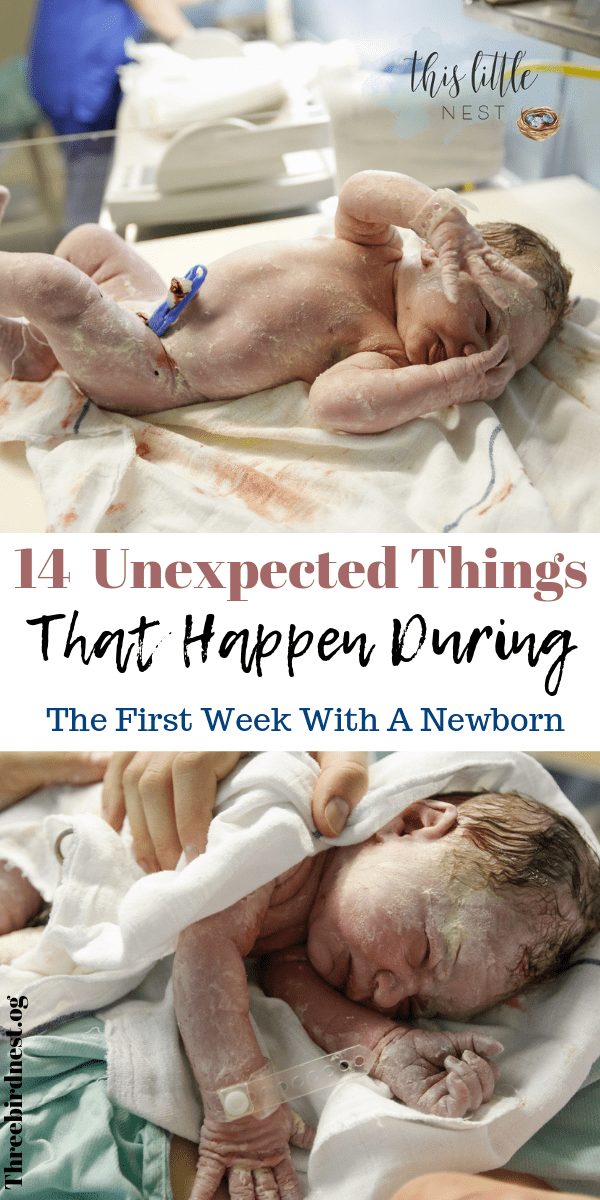
This is a big one. When most people think of babies they think of soft, round, and pink with bright little eyes. But this isn’t the case right after birth. They look very mashed and their little faces are flattened out quite a bit and their features can be very swollen.
After all, they were in a tight little space in that amniotic sack so everything was pushed down.
Here’s what to expect:
Your baby’s head may be cone-shaped if you had a vaginal delivery and especially if you had a vacuum-assisted birth. My first little boy was vacuum-assisted and his head was long and he had little swollen lymph nodes on the back of his head for weeks. That scared me a bit but Doc said he was just fine.
Your baby’s head will go to a normal shape within the first month or so but take care that your child doesn’t get a flat head from laying too much. As a side note, you can read this article on how to avoid flat head, as your baby grows so they don’t end up needing a helmet.
Your baby may also have pretty scary-looking bruises on their head if he/she had vacuum or forceps used.. These will fade too but they do increase the risk of Jaundice so keep an eye on that.
Your baby’s facial features may be swollen and it can look a little freaky. But they will take on a lovely shape as your first few weeks progress.
The baby’s genitals will be swollen as well. This is from the hormones you passed on to your baby before birth and it’s nothing to worry about. It can be alarming but they’ll go down quickly.
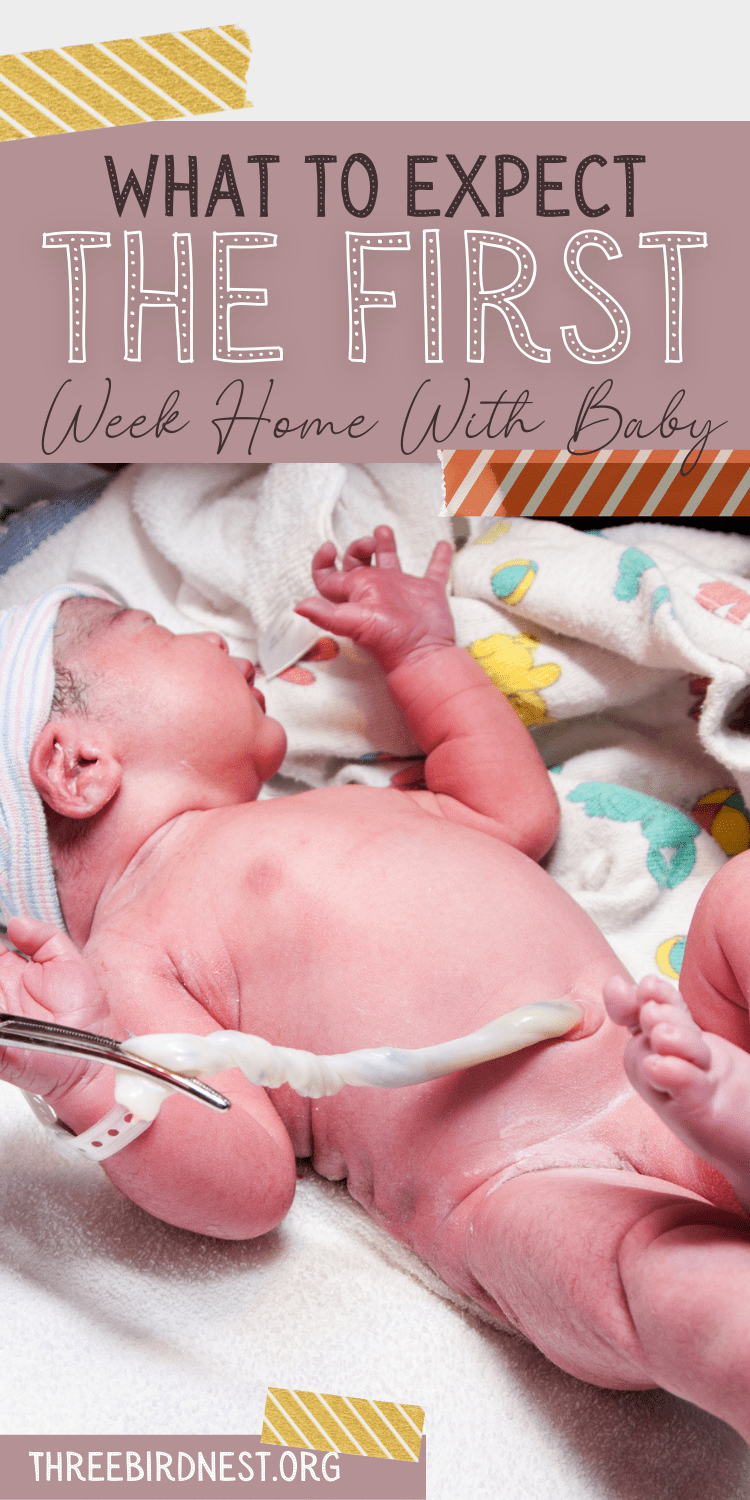
The Umbilical cord will look pretty gross. It will gradually dry, become black and then fall off, usually within the first 10 days.
Try to keep the umbilical cord clean and dry. If the area around the umbilical cord looks red or is sticky, let your pediatrician know.
There Will Be So Much Poop
Babies poop so much in those first few days. They are getting all the meconium out.
Meconium is the earliest stool that babies have and it looks like black tar. It’s made up of materials ingested during the time the infant spends in the uterus: intestinal epithelial cells, lanugo, mucus, amniotic fluid, bile, and water. They will poop this tar-like substance for about half the week.
All my babies pooped about 15 times a day for the first 3 days just getting this stuff out. It was So. Much. Poop. I could barely enjoy my little one between constant diaper changes.
After your breastmilk comes in the poop will turn to a dijon mustard yellow and they go after every feeding. This is a good indication that your babe is getting enough to eat.
She May Get Really Rashy And Have Gooey Eyes
Your baby will very likely get rashy and his eyes will run. They can develop all sorts of rashes, which typically aren’t serious.
Common rashes include cradle cap, diaper rash, heat rash, eczema, milia, and dry skin. My first had all of them.
Your little one may get gooey eyes too. This is a sign of a clogged tear duct and it usually gets better on its own.
You’ll Be Seeing The Doctor A Couple Of Times
Your Pedestrian will have you come in every couple of days at first and then the appointments will stretch further and further apart until they land at every six months or so. These are important so they can check to make sure your baby is gaining weight and eating well.
They will also check to make sure your baby doesn’t get Jaundice and give injections that he needs so don’t put them off.
I know it’s tiresome to keep going when you’re tired and you just want to be home but you have to do it.
Things Will Get So Much Easier After That first Week. Your body will adjust and your babe will adjust to her new home. A routine will eventually set in and you’ll get more rest. It’s all so worth it. Hang in there and enjoy these special ( but sometimes ) difficult moments. It’s all part of the package 😉
If you enjoyed this post or thought it was helpful, I would love it if you would share it with your friends.
You can share with the Pinterest images below or the buttons below or to the left. Thanks!
There’s also a button at the very bottom that will allow you to download this post as a pdf if you want to keep it. Just click on the purple button below.
Pin It On Pinterest Later With These Special Images!


















 I wish you all the best!