Knowing when you are most fertile and likely to get pregnant is never easy to pinpoint.
But the most crucial part of getting pregnant is knowing how to get the timing right. Statistically speaking, It usually takes approximately six to eight months to conceive.
Even then supposedly, a lot of people only have up to a 50% chance of succeeding in that given time frame.
But they seem to be low-balling that number in my opinion.
My experience and studies have shown me that the chances of success are higher.
Although you should not be too focused on achieving fast results and should try to relax and have fun, here is a simple guide to help pinpoint ovulation for a speedier pregnancy.
**Want Freebies For You And Your Baby? Get $330 Worth Of Gear! I have partnered with many companies to give you the best baby freebies online including Nursing Pillow, Pregnancy Pillows, Nursing Covers, Baby Leggings, Baby Clothes and so much more. You can find out how to get your freebies in this post right here.
By the way, this post contains affiliate links at no extra cost to you. As an Amazon Associate, I earn from qualifying purchases.
How to Pinpoint Ovulation for a Faster Pregnancy

Track Your Periods
Is your menstruation cycle regular? And how many days have gone by between each period?
This is the essential information and the first step that everything depends on. If you are unsure whether your periods are regular and how long each cycle is, you should start the tracking process.
The first day you begin bleeding should be recorded as “Day One” until you get your next period.
This should be done for approximately three or four months if you want to accurately measure how long and regular your cycle is.
The average menstrual cycle should be 28 days long, but even 23 and 35 days in length are standard.
The number of days varies each month, so there is no need to be alarmed if you do not consistently record the same.
A good way to keep a record of your cycle is through the Clue App. I’ve used it for years and it’s extremely useful. It has helped me learn so much about my cycles and body.
Calculate Your Ovulation Days
Successful conception depends on having sex within a small window of time.
During this short period (pun intended), a ripened egg gets released from one of the ovaries and moves into your fallopian tube.
A really good way to begin identifying these days is with an ovulation kit. These kits are a bit like a pregnancy test. You just pee on a stick and it will tell you when certain hormones are at their peak indicating ovulation.
They are very useful when you want to get pregnant as quickly as possible.
Below are some things you need to observe if you want to get an idea of when you ovulate and what’s going on with your cycle.
If your menstrual cycles are consistently regular, you can determine your ovulation days with simple mathematics. In the average cycle, your ovulation will occur 14 days before your period arrives. This can also be on day 14 of your 28-day cycle. Then you need to subtract 14 days from the length of your cycle. This should provide a brief guideline of when you are ovulating. For instance, if you have regular 30-day menstrual cycles, you will most likely ovulate around day 16. If your periods last for 26 days, you should be ovulating on day 12.
For those who experience irregular menstrual cycles, there are additional steps to determining an accurate ovulation picture. The most common technique is tracking your temperature. The best way to know if ovulation has occurred is when your regular or basal body temperature slightly increases. This thermal shift can be detected with daily temperature checks in the mornings and at night before going to bed. By doing this, you can witness a pattern to help predict when your exact ovulation days are. Usually, your temperature can increase up to half a degree around 24 to 48 hours after ovulation. A basal body temperature thermometer may be more effective than using a regular one. This way, you can see the time your basal body temperature rises to know how short your conception window is, especially when sperm is waiting in the fallopian tube for the egg’s release.
Must Read:
Another option is to use an ovulation prediction kit, as I mentioned before. This is more costly than doing temperature checks, but you can track your ovulation dates and times very accurately. You can find these in any regular drugstores, and they measure levels of luteinizing hormone in your urine. Therefore, you will need to take a urine test on a tester stick. When your luteinizing hormone levels go up, this is when your ovaries are ready to release the egg for a fast conception.
Changes in your cervical mucus are another low-tech method to monitor fertility.
Although these will not pinpoint your ovulation period as accurately as a prediction kit, you can still get a general indication of whether you are fertile or not.
When your body prepares to ovulate, you will produce excessive thin and clear mucus, paving a smoother path for sperm to link with the egg.
You will notice that your vaginal mucus looks and feels slippery like raw egg whites on your most fertile days that are right before ovulation.
After ovulating, the mucus will go back to become thicker before it slowly dries up.
The best way to do a mucus check is by collecting a sample gently on toilet paper by wiping the vaginal opening. If you do this numerous times a day and do not see enough mucus, you are probably not in the fertile period.
When to Have Sex
Most medical professionals recommend having regular sex approximately 1 to 5 days before ovulating.
If you start having sex during the ovulation period, it may already be too late.
Then you should also continue getting down to business the day after ovulation. This is because sperm can easily survive up to five days inside your body, while an egg’s lifespan is only a maximum of 24 hours.
Therefore, having intercourse before ovulating and doing it again the day after will skyrocket your chances of getting pregnant.
Even though several articles suggest the best sex positions for fast pregnancies, there is no guarantee.
When you pinpoint ovulation correctly, your chances are high no matter which sexual position you use.
It is best to do what comes naturally without stressing about getting pregnant if you have successfully tracked your ovulation window.
If you are under the age of 35 and cannot get pregnant despite having timed your ovulation and intercourse windows after trying for six months, you should visit your doctor for a fertility evaluation.
We wish you luck and joy on your TTC journey!!
If you loved this post and found it helpful save it to Pinterest for later or share it with your friends!
Pin It To Pinterest For Later!
There are several lots of important decisions you need to make during pregnancy that will have a huge impact on you and your babe.
When it comes to childbirth, it’s always best to be overprepared rather than underprepared. You have many options to go through to make those major choices, but we have narrowed down the ideal pregnancy checklist with 15 things you need to cross off.
This list will help make the experience a lot easier, so you can get all your prep done before the little one arrives.
**Want Freebies For You And Your Baby? Get $330 Worth Of Gear! I have partnered with many companies to give you the best baby freebies online including Nursing Pillow, Pregnancy Pillows, Nursing Covers, Baby Leggings, Baby Clothes and so much more. You can find out how to get your freebies in this post right here.
By the way, this post contains affiliate links at no extra cost to you. As an Amazon Associate, I earn from qualifying purchases.
Decisions You Have To Make During Pregnancy
Where To Give Birth
No matter how early you are in the pregnancy, it is always worth thinking about where you would like to give birth.
This needs to be your first and most important decision because it impacts who you pick to be your healthcare provider. Think about whether you want to have your baby at home, a hospital, or even a birthing center.
Your obstetrician will have specific privileges at some hospitals, so you should ask them to help schedule you in for your labor.
Some midwives may not be able to deliver at hospitals, so they will need to attend a home birth if you choose this option.
Birth location is a very special and personal choice, and you will need to find or switch doctors early in your pregnancy.
Most providers can accept patients until 34 weeks, but you can rest assured knowing that you have already locked down the best doctor or midwife for your child’s welcome into the world.
Must Read:
Breastfeeding Choices
The American Academic of Pediatrics (AAP) says that new mothers should breastfeed their babies for the first six months.
Then you should balance breastfeeding with some solid foods for about a year or more. I breastfed past the two-year mark with all three of mine and that’s perfectly acceptable.
However, breastfeeding is a personal choice. Not every mother is comfortable breastfeeding a newborn, so it all depends on your own lifestyle and needs.
If you decide to breastfeed, you will need to stock up on some nursing items like breast pumps, milk storage bags, nipple creams, nursing pillows, and so on.
A lactation consultant can help answer all your questions before the baby comes, and they can give you tips on how to get your baby to latch on if you decide to breastfeed.
You should also take a breastfeeding course because contrary to popular belief breastfeeding doesn’t always come naturally to mama and baby. Those first few hours are critical so it’s really important to go in knowing what you’re doing.
Milkology is a great option and it’s cheap and quick. You can see it here or you can click on the banner below.
Labor Pain Management Methods
Childbirth is not a pain-free experience. You may opt for an epidural to help manage the pain or go for an unmedicated birth.
There are a few options for you, so you should speak to your gynecologist to lock in a decision months before your due date. But you can always change your mind if you need to while giving birth. So don’t fret over it too much.
Choosing your labor pain management method will also impact where you give birth.
For instance, if you want an epidural, you will need to be admitted to a hospital.
In the meantime, try to take some childbirth classes to know what to expect. Labor can last for several hours and knowing what your body will go through will help you decide whether you want a medicated birth or not.
Some women handle the pain better than others, so this choice comes down to your personal preference.
Taking a labor course will help you make these important decisions and just like a breastfeeding course, a labor course is a super important step you should take to prepare for birth.
Here’s the best one online and you can do it at your own pace in about 3 hours’ time. You will learn EVERYTHING you need to know. Honestly, this course is amazing. You can find it here.
Finding a Pediatrician
Your newborn baby will need to get an immediate checkup after birth.
They will be taken for a routine exam in the hospital within 24 hours after being born.
This will be done by the medical staff or your pediatrician. Then your baby will need to undergo their first wellness health checkup a week after their birth.
Therefore, you will need to have a great pediatrician on speed dial before the baby arrives since you will rely on their support. Start interviewing potential doctors in your area when you are in your third trimester to ensure that they will be a good fit.
Also, read reviews. I got stuck with a terrible Pediatrician with my first kiddo and had to change. Not a fun or easy experience.
Hiring a Doula
A Doula is a birthing expert that can help you through the process. Even though you do not need to hire them, they are extremely helpful.
They are trained to provide a lot of emotional, educational, and physical support.
Doulas are not qualified to give any medical care, but they can encourage and motivate you through labor. They will go over your birthing plan and answer any questions you have.
Doulas can also guide you on the different positions for more comfort and help you practice some breathing techniques.
You can ask them to massage any aches, and they have great advice for any postpartum support you may need.
Interview reputable doulas in your area to choose the right person because you will be spending a lot of time with them.
Cord Blood Banking
This is a process where blood leftover from a newborn baby’s umbilical cord gets collected for medical purposes in the future.
This can be used to provide cancer treatment for your child down the line. I really wish I had done this for mine but I didn’t know about it at the time.
Or you can donate it for another child who may need a transplant. You can choose whether you want to store this blood from the cord in a private bank by paying a fee.
Alternatively, you can donate it to the public blood bank.
If you want it in your own cord blood bank, then you will need to choose the right one and get their collection kit approximately six weeks before you are due.
Let your doctor know your final decision, and they will be prepared to collect the blood for you moments after birth.
Delayed Cord Clamping
If you have decided to collect blood from the umbilical cord, you cannot delay clamping the cord to prevent clots.
This is a standard procedure that you will need to discuss with your doctor to see if this is something that they can consider without risking your health. Clamping of the cord can usually be delayed by a few seconds to 5 minutes.
Saving Your Placenta
Nearly half an hour after giving birth, your body will get rid of the placenta.
If you choose to keep the placenta for any symbolic reasons, you will need to talk to your doctor.
You may want to drink it in a smoothie or consume it in the form of pills. The placenta can be helpful with postpartum recoveries by boosting your mood and production of breast milk.
However, the Centers for Disease Control and Prevention (CDC) advises against eating the placenta because it can lead to infections for you or the baby.
If you want to save the placenta for personal reasons, tell your doctor in advance to use methods that will lower the risk of infections.
Think About Circumcision
If you are giving birth to a baby boy, you will need to think about whether you want them to be circumcised or not.
Many parents go this route for cultural and religious reasons.
However, there are also medical advantages of circumcisions to help prevent urinary tract infections and other sexually transmitted diseases in the future.
Research Baby’s Shots
Newborn babies come into this world with low vitamin K levels, which is necessary to form healthy blood clots.
A vitamin K deficiency for a new baby can be life-threatening because there is a risk of bleeding out if they cannot clot correctly.
Parents have a right to decline these shots, but it is always better to get them once they are born.
Your baby may also need a Hepatitis B vaccine.
Ensure that you do the research beforehand and are prepared to sign all consent forms before giving birth.
People in Delivery Room
Although most family members and loved ones would love to cram into the delivery room to support you, it is always best to choose who you want to be there before going into labor.
This way, you can avoid all the stress and family dramas, especially if hospitals only allow a couple of people in there with you.
You can also choose when to let someone inside. If you permit a friend and partner, they do not have to be with you the entire time if you need some privacy.
Delivery Room Experience
After picking the person you want in the delivery room with you, the next step is to think about the environment you want to set before going into labor.
Some mothers prefer curating playlists to listen to music while giving birth.
This is useful if you want some motivation or soothing sounds, especially during breathing exercises.
Alternatively, you can also bring some essential oils and a diffuser to help you cope with stress.
If you want peace and quiet, you can also hang a “Do Not Disturb” sign outside the door so nurses will know to keep their voices down.
Immediate Touch
Skin-to-skin or kangaroo care involves keeping your naked baby directly on your chest. This helps newborns regulate their body temperature and stabilize critical signs.
It can also soothe the cries of your babies and lead to healthier weight gain and breastfeeding progress.
If you want to go through this process with your child, make sure to inform your care provider even if you are undergoing a c-section.
Baby’s First Bath
Your baby will be born covered in a white and waxy substance known as vernix. This is where the baby will need a sponge bath a couple of hours after they are born.
However, some people prefer delaying the first bath for an entire day. This is because vernix can help keep the baby warm while regulating their blood sugar.
New mothers also avoid washing their babies before bonding with some skin-to-skin contact.
Unless there is a medical reason, you can delay washing your newborn baby for a few hours. Plan the best way to give them a first bath before going into labor, and let your doctor know to prevent any last-minute surprises.
Using Pacifiers
Although there are benefits of using pacifiers to lower SIDS, they can lead to ear infections and other dental problems as the baby grows. Learn more about preventing SIDS here.
Research the benefits and risks of using pacifiers before deciding whether you want your child to have one. If you want to use a pacifier, you will need to think about ways to introduce it to the baby.
Some may be happy accepting it from the get-go, but others can be hesitant to take it. Some nurses in the hospital may also offer a pacifier to help calm the baby, so you should always let them know your decision before birth if you are comfortable using pacifiers or not.
In the end….
Childbirth is always full of unknown factors, even though some women may be having their third or fourth child. With each child you’ll have important Decisions You Have To Make During Pregnancy.
It’s always an unnerving experience for mothers, despite how much experience they have. Stay flexible with your choices and decisions.
That way, you will not get disheartened if something does not go your way entirely.
If you loved this post share it with your friends or save it to Pinterest with the special images below!
Good luck mama!!
Pin To Pinterest For Later!
Giving your baby their first bath In the hospital seems like a no-brainer but waiting to bath your newborn has profound and lasting health benefits
Luckily it’s now standard protocol at many hospitals to wait 8-24 hours to give a baby his or her first bath, and up to 48 hours if the baby was delivered by cesarian section.
However, despite this, some will still try to bathe them right away so it’s important that you’re informed.
Make sure the staff knows about the benefits of delayed bathing before your little one is born so you don’t have to struggle with them in the aftermath.
***This post may contain affiliate links at no cost to you.
Giving Your Baby Their First Bath In The Hospital | Amazing Benefits of Delaying Baths for Newborns
Boost Mother-Infant Bonding
Bonding with your baby plays an important role in your newborn’s brain development. It’s believed that a baby’s social, cognitive, and emotional development depends on a loving bond early on.
A lack of connection can lead to long-term mental health problems and have a negative impact on their potential and happiness in life.
Waiting to bathe is a small thing. But it increases the amount of time you spend with your baby right away and gives her the comfort and time she needs to make a connection.
Those first few minutes and hours are so important so don’t let them take your babe right away.
****Want Freebies For You And Your Baby? Get $330 Worth Of Gear! I have partnered with many companies to give you the best baby freebies online including Nursing Pillow, Pregnancy Pillows, Nursing Covers, Baby Leggings, Baby Clothes and so much more. You can find out how to get your freebies in this post right here.
Breastfeeding Success
The standard at many hospitals has always been to bathe baby right after birth, but new studies have brought to light the benefits of waiting and how it affects breastfeeding.
A study from the Journal for Obstetrics, Gynecologic and Neonatal Nursing found that delaying that first bath increased the success rate of breastfeeding
while in the hospital which contributes to successful breastfeeding when at home.
**Must Reads:
Your complete pregnancy shopping list from A to Z.
Here’s your Full Mega TO-DO list for all three trimesters!
Waiting also helps give you and your baby more of the necessary skin-to-skin contact but also keeps the baby’s body temperature warm, and ensures a familiar odor so that baby feels comfortable enough to latch.
Breastfeeding right away can be easier too because baby can remember how to suck and swallow from their time in the womb.
It’s something you should do immediately after birth so don’t let them rush you. A good Docter and facility will know this.
Check This Out As Well: Why Delayed Cord Clamping Is SO Important!
Temperature Control
If a baby gets too cold, blood sugar can drop and other complications arise. This is a very real issue.
Your baby already has to use a lot of energy to stay warm and giving a bath too early can cause hypothermia at worst and great discomfort at best.
Inside the womb baby’s temperature is a snug and cozy 98.6 degrees.
But then suddenly your child is born into a 70-degree room and her body needs to work hard to transition to the environment. It’s a huge and shocking change.
So take time to allow your little one to adjust and cuddle with you. It will do you both good.
***Have You taken a prenatal birth course yet? Don’t have time? Here’s the best Premium online birthing course that will teach you everything you need to know in a few hour’s time online.
Skincare and Protection from the Vernix
While in the womb babies develop a white cheese-like coating on their skin. This coating, the vernix, provides an important waterproof barrier of protection for the baby in and out of the womb.
Waiting to bathe allows the vernix coating to stay longer so that it can moisturize and protect the skin, help regulate warmth and body temperature, and ensures that baby benefits from the antioxidant properties.
The vernix is both antimicrobial and antibacterial in nature and protects baby’s skin from infection. It’s pretty amazing stuff even though it looks yucky.
This is the very best moisturizer for baby; the Vernix is far better than any lotion or cream.
Instead of being washed away, rub it into baby’s skin gently.
Doing this instead of washing it off makes for great bonding time and will leave baby’s skin feeling soft and supple.
Your baby comes covered in it for a reason so take advantage of what nature is providing.
Less Stress, Better Health
Research shows that both babe and Mom benefit from reduced stress levels after cuddling. It helps ease your baby’s natural fears and confusion right after birth.
So hold your child for a while and make your first attempts at breastfeeding before they whisk him away.
Skin-to-skin
Skin contact as soon as possible plays an important role in comforting baby and decreasing the stress and trauma of birth.
Delaying a bath means skin-to-skin contact can happen right away and baby gets the support she needs from mom while adapting.
The physiological benefits are important and skin-to-skin contact can stabilize heart rate and regulate respiratory breathing patterns. It’s all very fascinating how simple touch can have such a strong effect on you both.
In The End….
Less stress for mom and baby equals better health. Giving Your Baby Their First Bath In The Hospital 24-48 hours later is an amazing an way to promote good health and bonding.
Delaying a bath is such a simple thing really, but it ensures baby reaps all the benefits that come from waiting. Don’t be afraid to question hospital policy and communicate any wishes to your nurse and doc.
Creating a simple birthing plan can help them understand your expectations.
Good luck to you and your babe!
If you loved this post share it on Pinterest with the images below or on your favorite social media platform!
Pin It On Pinterest For Later!
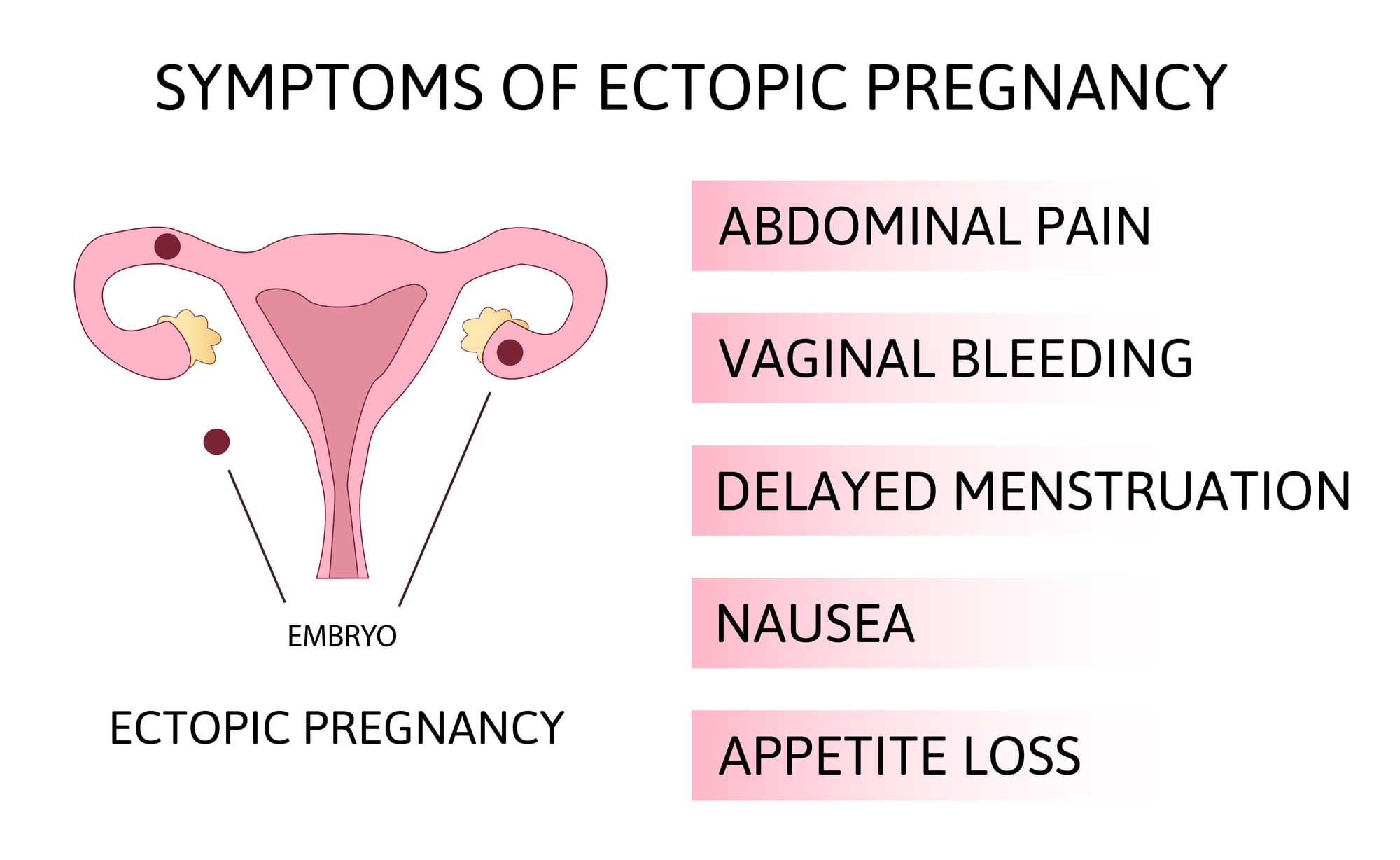
If you’re pregnant or trying to get pregnant it’s important that you know the signs of ectopic pregnancy.
It’s a rare complication but it’s still important you know the symptoms.
What Is Ectopic Pregnancy?
When a fertilized egg grows outside of a woman’s uterus it is called an extrauterine or ectopic pregnancy.
The word ‘ Ectopic ‘ itself means ‘out of place ‘ and the condition can be extremely painful. It is fairly rare but often life-threatening making it the most dangerous cause of first trimester bleeding.
In the very beginning, an ectopic pregnancy can feel like any other normal pregnancy. You might experience fatigue, nausea, and morning sickness, breast tenderness, and missed periods.
Others may not even be aware they are pregnant; this is because most of the time ectopic pregnancy happens very early on in the
first few weeks.
Only a doctor can diagnose ectopic pregnancy but there are some warning signs you should be aware of. Below is a quick list of things you should look out for just in case.
Light vaginal bleeding or spotting should always be checked out by a doctor
Pelvic pain or abdominal cramping could be an indicator that something is wrong and shouldn’t be
ignored
Upset stomach or vomiting unrelated to morning sickness warrants a call to your doctor
Dizziness, weakness, or fainting can be a sign that something serious is going on and should be
discussed with your doctor
Persistent pain in the rectum, shoulder, or neck is common with ectopic pregnancy
Lower belly pain that occurs primarily on one side should be checked out
An ectopic pregnancy can cause your fallopian tube to burst or rupture and cause life-threatening bleeding so the earlier an ectopic pregnancy is found and treated the better.
If you experience severe pain or bleeding, head to the emergency room right away.
If you have any other symptoms contact your doctor as soon as possible.
A pregnancy cannot survive if it’s ectopic. Because a fertilized egg cannot grow outside the uterus, your doctor will need to take it out to avoid serious complications. This is done with medication or surgery.
I encourage every woman to listen to her inner voice and her body. You know more than anyone if something is off, or doesn’t feel right.
So be intuitive and listen to what you’re body is telling you.
Speak up and ask questions and never hesitate to get medical attention if you feel like something is going on.
If you felt like this post was helpful please help spread the word so others can be aware of this condition. You can share with the special Pinterest image below or on your favorite social media platform.
Pin it on Pinterest For Later!
With regular intercourse, you have a 50/50 chance of conceiving a boy or girl obviously, but what if you could increase those odds and influence the gender of your baby? Would you want to do it?
There’s a lot of information out there that suggests diet, body chemistry, and timing can determine the sex of your baby, and there is some truth to it.
Many parents will swear by gender selection through a variety of at-home methods.
But reproductive experts will tell you there is no foolproof method for conceiving a boy or girl at home, but you might be able to sway the odds in your favor.
With that being said the Shettles Method worked for us. Not once but three times!
Timing sex around ovulation is the most well-known natural gender swaying method for choosing the sex of your child and this is known as the Shettles Method.
The Shettles method is very popular and was developed in the sixties by Dr. Landrum Shettles, MD, Ph.D.
He had the idea that timing intercourse to a woman’s cycle and assuming certain sexual positions can influence gender. He Was Right.
Dr. Shettles believed that the X sperm that creates a girl were slow swimmers but survived longer, while the Y sperm that creates a boy were faster swimmers but had lower stamina.
****Want Freebies For You And Your Baby? Get $330 Worth Of Gear! I have partnered with many companies to give you the best baby freebies online including Nursing Pillow, Pregnancy Pillows, Nursing Covers, Baby Leggings, Baby Clothes and so much more. You can find out how to get your freebies in this post right here.
He believed conceiving a girl was done by having sex a few days before ovulation, and conceiving a boy was done by having sex the day of or after ovulation.
Dr. Shettles shows that the environment affects the survival of sperm too.
The female sperm survive better in acidic environments whereas male-producing sperm perform better in a high alkaline environment.
Women’s secretions are most alkaline as ovulation approaches and become more acidic further away.
Dr. Shettles felt that the timing of intercourse was the most crucial part of determining gender selection. Intercourse that occurs near ovulation, more times than not, will produce a male offspring.
Amazing Right?
By the way, this post contains affiliate links at no extra cost to you. As an Amazon Associate, I earn from qualifying purchases.
Shettles Method: To Have a Girl
( To use this method you’ll need an ovulation kit )
To have a girl, time your intercourse during the transitional days, two to three days before ovulation.
The Shettles method suggests that the woman should avoid having an orgasm and shoot for shallow penetration, furthest from the cervix.
A missionary position or some variation that allows for a shallow penetration is recommended.
Male sperm will have a more difficult time making the journey to the cervix and this favors the slower, more resilient “female sperm”
Must Read: Your Complete Pregnancy to-do list from the first trimester to last
Your Complete Pregnancy Shopping List From Beginning To Breastfeeding, Postpartum, and Baby
Shettles Method: To Have a Boy
If you’re wanting to conceive a boy it’s important you know your ovulation cycle and have intercourse as close to ovulation as possible and with deep penetration.
The idea is that since the Male Y sperm is faster it’ll get there first and fertilize the egg.
To improve your chances of a boy you’ll want to refrain from having intercourse for 5 days prior to ovulation and have intercourse just before and at the time of ovulation.
This timing is thought to be the most crucial part of gender selection. You should choose a position that allows for deep penetration such as “doggy style” so the sperm will be deposited closer to the cervix.
The “boy sperm” will have less distance to travel and is more likely to survive.
When you are trying to conceive men should avoid wearing tight clothes. Although heat can kill both types of sperm, it kills off the smaller “boy sperm” faster.
Women should have an orgasm which increases the alkaline in the vagina and creates an ideal environment for conceiving a boy.
If possible, the male should try to have an orgasm right before or at the same time.
Dr. Shettles claims an overall 75 percent success rate when using his method for choosing gender.
So if you want to have a boy or want a girl you should try the Shettles Method!
In The End….
The Shettles Method is a fun and easy way to try to sway the gender of your baby.
Like I said before, The Shettles Method Worked For us not once but every time we got pregnant. So it is absolutely worth a try.
Good Luck and I’ll be sending baby dust your way…
Save It On Pinterest For Later!