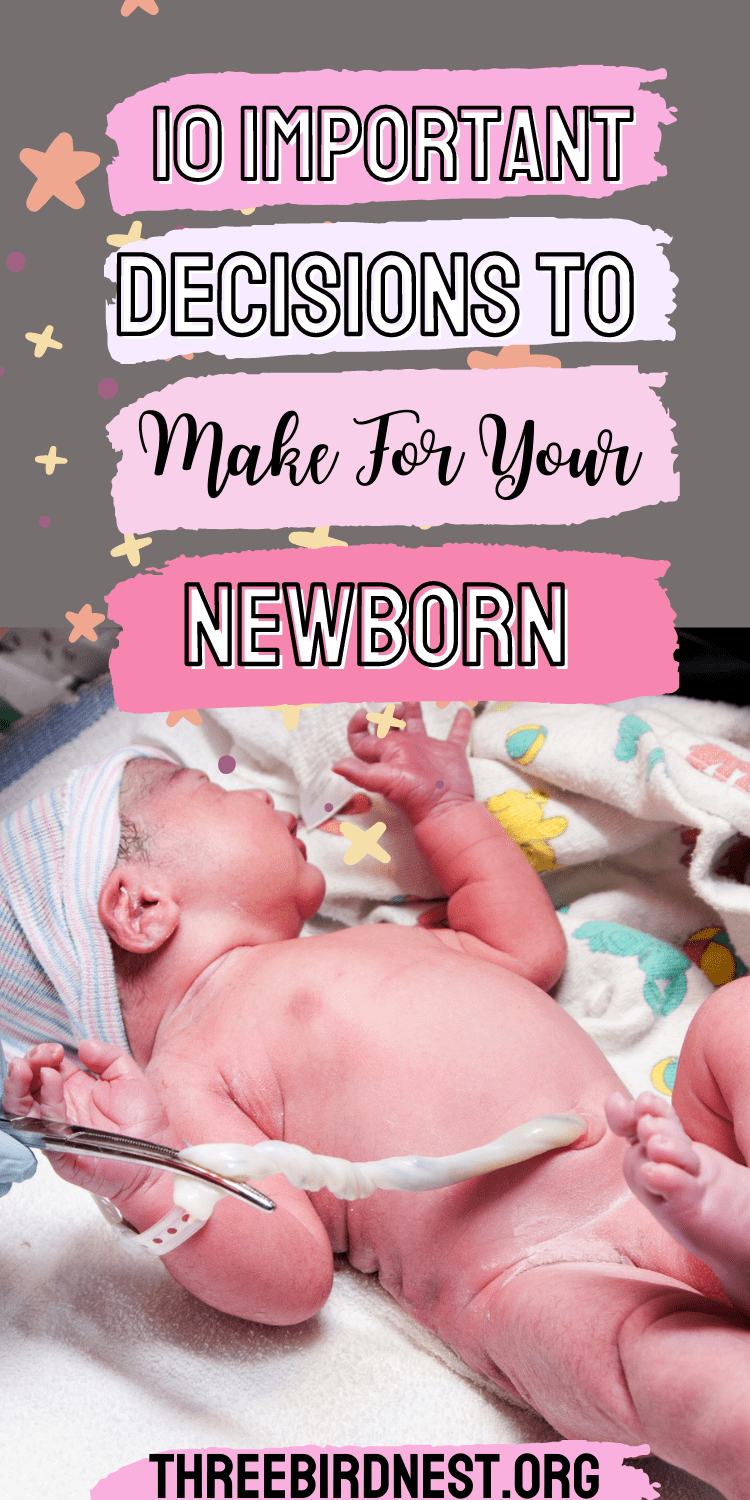
With your new baby comes decisions that need to be made. Some are a big deal, some are not.
But you need to be aware of the things that will happen beforehand.
It’s very important that you are informed about all of the decisions you’ll be making before your baby arrives.
If you are uninformed and you don’t know what to expect and don’t make a decision, your caregivers will likely make them for you.
This could create disappointment for you later on or even a health issue.
Below are 10 decisions that you’ll need to consider right away once your baby is born.
*Want Freebies For You And Your Baby? Get $330 Worth Of Gear! I have partnered with many companies to give you the best baby freebies online including Nursing Pillow, Pregnancy Pillows, Nursing Covers, Baby Leggings, Baby Clothes and so much more. You can find out how to get your freebies in this post right here.
By the way, this post contains affiliate links at no extra cost to you. As an Amazon Associate, I earn from qualifying purchases.
10 Decisions to Make For Your Newborn Before Someone Else Does
Picking The Right Pediatrician
You should definitely have a pediatrician picked out before your babe arrives.
You should begin your search for one around 28 weeks.
When looking for the right pediatrician make sure you check reviews online. This will give you insight into their history and reputation.

Also, make sure they take the insurance that you have.
Meeting them beforehand is also a great idea. You should go check out their office and have a quick interview. After all, you’ll likely see them often and you want to make sure they are compatible with your personality and will meet your specific needs for your child.
Will You Be Breastfeeding?
Choosing to breastfeed or bottle-feed is a very personal decision.
It’s one of the biggest decisions you’ll make as a new mommy.
The issue has always been a controversial one, although it’s ridiculous, but has often left parents feeling judged for choosing bottle-fed formula vs breast milk.
You do whatever works best for you.
**Read: What to expect the first 24 hours in the hospital after your babe is born
What To expect After Vaginal Childbirth
With that being said there are many benefits to choosing the breast.
Feeding time with your baby is special and it helps with bonding. It allows plenty of time for skin-to-skin contact which can help your baby thrive.
Breast milk is also typically much easier on your baby’s tummy.
Breastfeeding can help your baby fight off nasty viruses early on due to the natural mix of vitamins, proteins, and fats found in breast milk. It really is the perfect food.
It’s generally easier to breastfeed than get up in the middle of the night and prepare bottles as well. So it makes for an easier lifestyle overall.
****If you’re still pregnant but haven’t taken a birthing class yet, there’s a great online course by Hilary Over at Pulling Curls. She’s a nurse and this is the best birthing class online today and at a great price point and part of the course is totally free. Have a look here. You can also get a free birth plan right here.
Circumcision
Getting your little boy Circumcised is a personal choice. I have two boys and one is circumcised and one is not.
That’s because our first child quickly formed a skin bridge from the healing within 24 hours.
A skin bridge in this area would refer to the penis growing to the scrotum. Luckily this issue resolved itself but surgery was almost needed.
For this reason, we decided not to circumcise our second boy.
But circumcision is generally very safe and despite all that happened, we still have a neutral stance on the subject.
Here are some facts about circumcision:
- It can reduce the risk of certain health conditions, such as urinary tract infections and some sexually transmitted diseases, but not enough for the American Academy of Pediatrics to recommend the procedure.
- It is considered safe, with a small complication rate of only about 1.5 percent.
- No special hygiene is required for an uncircumcised infant; as the boy grows, he will learn to gently retract the foreskin when peeing or bathing.
Delayed Cord Clamping
When your babe is born, as much as 25-60% of the fetal blood supply remains inside the placenta.
Waiting to clamp the umbilical cord, for just 30-60 seconds after birth, allows the placenta to pulse this extra blood to the baby.
There are just so many benefits to this. To learn more about delayed cord clamping read this post here.
Cord Blood Banking
Umbilical cord blood is an important and rich source of stem cells. So banking the blood is a good idea for your baby.
These cells can be used for the treatment of many diseases, including cancers and immune and genetic disorders. It’s a good way to protect your little one if any issues come up.
You can get more information on cord blood banking
here.
The Golden Hour
The first hour after childbirth is known as the Golden hour.
These are the moment when you begin your breastfeeding journey and skin-to-skin contact.
The unclothed newborn is directly placed on his/ her mother’s tummy and breast right after birth, before cutting the umbilical cord. There is no bulb suctioning of the newborn’s mouth either during this time.
The Golden Hour allows for complete cord pulsing before clamping and cutting so that your baby gets all the blood benefits of an unclamped cord.
Having skin to skin time can maximize the bonding experience between mother and child.
You should create a birthing plan and include details about the Golden hour in it if you want these things.
Here’s a birthing class that you can take online that has a birthing plan template and everything you need to know about childbirth.
You can check that class out for free here as well.
Eyes and Thighs
Shortly after your baby is born, they’ll get what’s often called “eyes and thighs.” This refers to a vitamin K shot and an antibiotic eye ointment.
In a lot of states, this is mandatory but not everywhere.
Some parents don’t feel comfortable introducing so many chemicals to their newborn right away.
If you’re worried about this you should check your state’s rules and regulations on it and make your decision accordingly.
Hepatitis B Vaccine
Mothers can unknowingly pass hepatitis B to their babies at birth.
So It is important to vaccinate babies so they will be protected as early as possible from any exposure to this virus.
Babies and young children are not able to fight off the hepatitis B virus and it can be detrimental to their health.
But the decision is ultimately yours. So it’s something you should consider before the birth of your little one.
To Use A Pacifier Or No
This is another important decision to make for your baby. Pacifiers can come in handy, however, they do have drawbacks.
A pacifier is a good distraction and can help your baby sleep as well as soothe them when they’re fussy.
But it also poses problems such as increased ear infections, nipple confusion, dental issues in the future, and your child will likely become dependent on it. This can affect their ability to self-soothe, as well as language development as they get older if they use it constantly.
So it’s really something to think about. You may want to attempt using it temporarily but I’d advise against it, especially if you’re going to breastfeed.
The First Bath
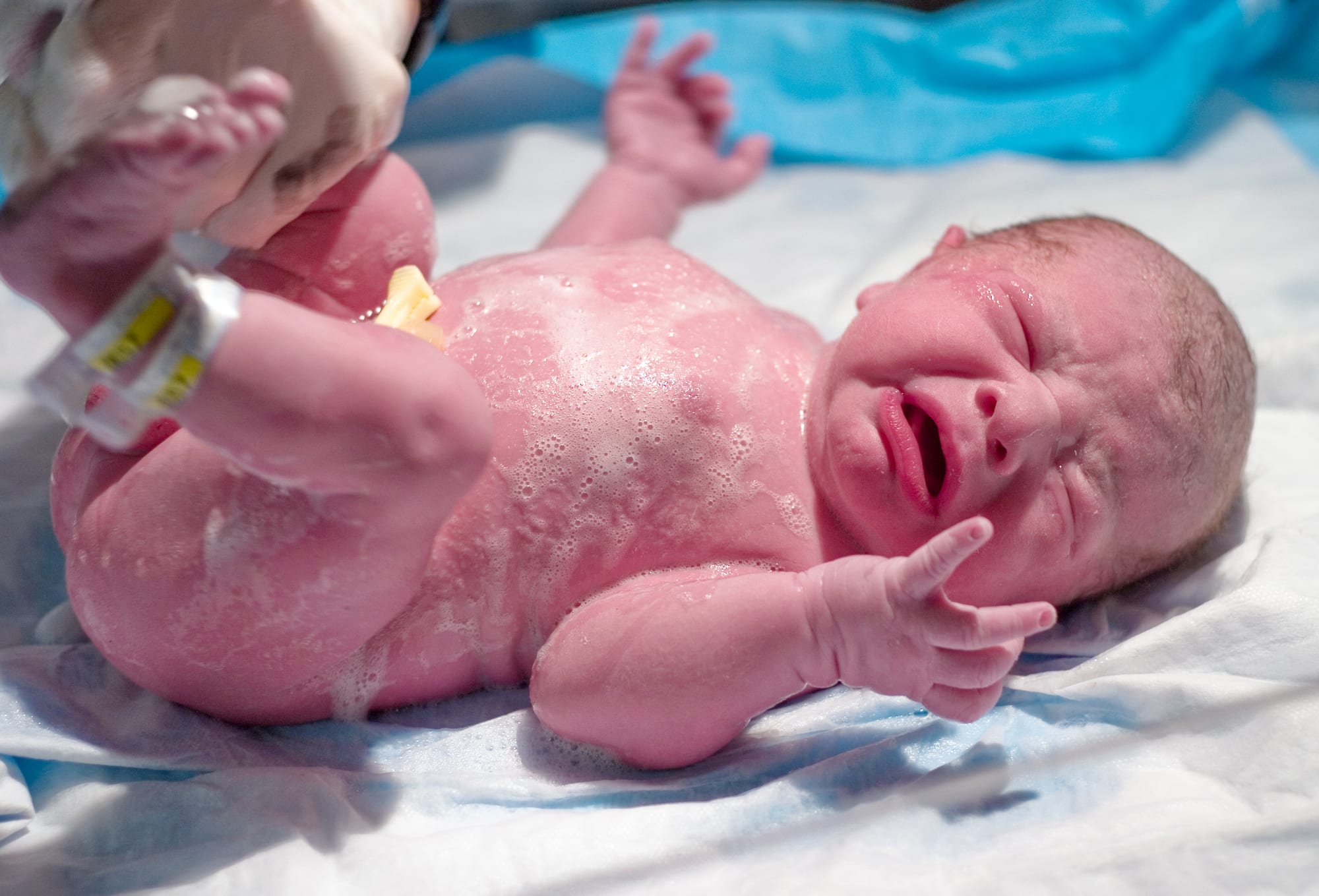
While most institutions used to bathe babies within an hour or two of birth, many are changing their policies.
The World Health Organization (WHO) recommends delaying a baby’s first bath until 24 hours after birth—or waiting at least 6 hours if a full day so that the Vernix can stay on the skin as long as possible.
The vernix has antibacterial and antimicrobial properties that are beneficial for your little one.
Not only that, a bath will mean a stranger will have to manhandle your babe and it’s scary, cold, and uncomfortable.
It’s a good idea to wait if you can. Having an immediate bath is in no way a necessity.
In The End…..
There are lots of important decisions to make for your new baby. These are just a few of the most important ones that you’ll need to make immediately after birth.
So it’s important to think about them beforehand to be prepared.
Good luck to you mama!
Pin It On Pinterest For later!
“Vaginal tearing can’t be avoided 100%.” This statement often misleads first-time mamas into thinking it is an unavoidable thing that cannot be prevented.
But no. The truth is that you can do a lot to prevent vaginal tearing. Many things are in your control.
While it is an unfortunate truth that vaginal tearing happens a lot during childbirth ( happened to me all three times and I have the lovely, strange scars to prove it ) you can avoid this with some effort. Remember that there are 4 tearing levels from minor to severe.
Today, our goal is to arm you with practical tips that will help you to avoid severe tears.
*Want Freebies For You And Your Baby? Get $330 Worth Of Gear! I have partnered with many companies to give you the best baby freebies online including Nursing Pillow, Pregnancy Pillows, Nursing Covers, Baby Leggings, Baby Clothes and so much more. You can find out how to get your freebies in this post right here.
By the way, this post contains affiliate links at no extra cost to you. As an Amazon Associate, I earn from qualifying purchases.
6 Ways to Prevent Vaginal Tearing During Childbirth
1. Do Perineal Massage to Soften the Tissues
You can help prepare your tissues for childbirth with a massage.
In this regard, perineal massage can’t be neglected. It softens the tissues to endure stretching at delivery time.
This elasticity drops the chances of severe tearing or episiotomy during vaginal delivery.
Experts advise starting perineal massage between 34-36 weeks of pregnancy.
Massaging 3-4 times a week for 5-10 minutes is good enough.
How to do Perineal Massage
- Wash your hands with a mild soap so they don’t cause any irritation inside the vagina.
- Find a relaxing position such as sitting with your legs open with bent knees.
- Apply a lubricant on your thumbs and insert them inside your vagina approximately three to four centimeters.
- Now, start stretching the vaginal opening gently but with enough force to feel pressure in your vagina. You should keep your thumbs in this stretched position for about 120 to 180 seconds.
- Afterward, move your thumbs outward and repeat the above-mentioned steps 2 times.
Precautionary Measures
Natural organic oils such as olive and sunflower are better choices for perineal massage. If you can’t bear the smell of these oils then consider using water-based lubricants. However, avoid synthetic products at any cost.
Moreover, if you have a history of vaginal infections, consulting a doctor is a must before trying this method. Otherwise, it can cause yeast or bacterial infections.
2. Deliver In an Upright Position
Do you know changing your position can change the pelvis opening size? Neat right?
The key is to choose the position that can open your pelvis the most.
Upright is considered a safe and comfortable delivery position for both the active and second stages of labor. It helps you to avoid severe tearing during childbirth.
Upright positions bring stronger contractions as well, and that helps bring the baby down and reduce pain.
These benefits make the upright position your best choice for not only preventing tearing but having an easier birth in general.
It’s highly recommended to stay in that position as long as possible to speed things up and keep things going.
Tips to Practice Optimal Childbirth Positions
It’s recommended that you take a prenatal class like this one to help educate on childbirth positions as well as all other aspects of having a baby.
You will feel ready and secure once the big day arrives knowing how to best go about the whole process. It lends a sense of readiness and calm that you’ll need, believe me!
Here’s a great course created by a labor and delivery nurse I know. It only takes a few hours to take and you can do it in the comfort of your home.
Here’s a great course if you wanna check that out too!
3. Prepare to Push Gently
“Push, honey push.”
Till now you might have made up your mind that you need to exert much strength to push your baby out.
The chances are you have already started imagining yourself in a hyperventilating position or holding your breath during the labor and the credit for this goes to the movies.
So, what’s the solution?
You should aim to deliver your baby slowly and gently so that childbirth may cause only minimal tearing.
Obviously, this is only if your unique childbirth experience allows it. Some babies come fast and there’s not a thing in the world to do about that.
But to keep a slow and steady push ( when contracting ), you should keep practicing breathing exercises in your third trimester up until birth.
Along with keeping you focused, breathing helps relax the body and keep the oxygen supply up for healthy delivery.
There are many techniques but “destresser breath” can work in early, active, and final labor stages as well. All you need to do is inhale deeply from the nose for about 4 seconds and exhale long for 6 seconds through the mouth.
4. Use a Warm Compress during Birth
During labor, there’s a ton of pressure on the pubic bone. It feels crazy.
However, placing a warm compress can make you feel relaxed and increase your mobility.
It is a simple and effective measure to reduce the severity of tearing during childbirth.
Usually, the compress is soaked in warm water having a temperature of around 45-59-degree C.
Check the temperature with your hand before applying so that you don’t burn yourself and cause inflammation which could increase your chances of tearing.
Add this to your birthing plan also so that the staff will be able to accommodate your needs.
5. Eat Well To Nourish Your Skin And Tissues
Pregnancy demands extra care of your body.
In general, it is recommended to have a balanced diet for overall well-being.
This includes a reasonable portion of protein, carbs, fats, and fiber in your diet.
However, everybody’s body is different. Maybe, one expecting mama is suffering from iron deficiency and the other one has low calcium levels.
So, you need a customized diet to fulfill the needs of your body.
It is best to consult your doctor and even a professional nutritionist if you can to stay fit and healthy throughout pregnancy.
After all, you need energy and strong muscles to deliver your baby – especially perineal muscles.
Also taking an excellent prenatal like Ritual Vitamins Prenatal will help keep your tissues healthy and strong. It’s the ONLY prenatal we recommend here at This Little Nest because it’s the BEST.
Pro Tip – Eat Dates Regularly
In the middle of the third trimester, you should start eating foods that induce labor and speed up the childbirth process.
Date intake is extremely effective for this, believe it or not.
A study suggests that eating six dates per day (during late pregnancy days) can reduce the need for labor induction.
Moreover, faster cervical dilation is seen among women who regularly ate dates before labor – all leading to reduced chances of perineal tear.
6. Keep Yourself Hydrated
Just like healthy food, a reasonable increase in water intake is necessary during pregnancy.
Besides regulating other body functions, it helps increase your skin elasticity.
As a result, it lessens the chances of perineal tearing. Experts recommend drinking 8 to 12 cups of water every day.
To Wrap It Up
It is extremely important to prepare your body beforehand for easy labor.
That’s why we recommend you start practicing the above-mentioned tips as early as possible to avoid excess vaginal tearing during childbirth.
We wish you luck and happiness, mama!
If you enjoyed this post share it with your friends on your favorite social media platform or Pin It To Pinterest with the special images below!
Pin It To Pinterest!
There are several lots of important decisions you need to make during pregnancy that will have a huge impact on you and your babe.
When it comes to childbirth, it’s always best to be overprepared rather than underprepared. You have many options to go through to make those major choices, but we have narrowed down the ideal pregnancy checklist with 15 things you need to cross off.
This list will help make the experience a lot easier, so you can get all your prep done before the little one arrives.
**Want Freebies For You And Your Baby? Get $330 Worth Of Gear! I have partnered with many companies to give you the best baby freebies online including Nursing Pillow, Pregnancy Pillows, Nursing Covers, Baby Leggings, Baby Clothes and so much more. You can find out how to get your freebies in this post right here.
By the way, this post contains affiliate links at no extra cost to you. As an Amazon Associate, I earn from qualifying purchases.
Decisions You Have To Make During Pregnancy
Where To Give Birth
No matter how early you are in the pregnancy, it is always worth thinking about where you would like to give birth.
This needs to be your first and most important decision because it impacts who you pick to be your healthcare provider. Think about whether you want to have your baby at home, a hospital, or even a birthing center.
Your obstetrician will have specific privileges at some hospitals, so you should ask them to help schedule you in for your labor.
Some midwives may not be able to deliver at hospitals, so they will need to attend a home birth if you choose this option.
Birth location is a very special and personal choice, and you will need to find or switch doctors early in your pregnancy.
Most providers can accept patients until 34 weeks, but you can rest assured knowing that you have already locked down the best doctor or midwife for your child’s welcome into the world.
Must Read:
Breastfeeding Choices
The American Academic of Pediatrics (AAP) says that new mothers should breastfeed their babies for the first six months.
Then you should balance breastfeeding with some solid foods for about a year or more. I breastfed past the two-year mark with all three of mine and that’s perfectly acceptable.
However, breastfeeding is a personal choice. Not every mother is comfortable breastfeeding a newborn, so it all depends on your own lifestyle and needs.
If you decide to breastfeed, you will need to stock up on some nursing items like breast pumps, milk storage bags, nipple creams, nursing pillows, and so on.
A lactation consultant can help answer all your questions before the baby comes, and they can give you tips on how to get your baby to latch on if you decide to breastfeed.
You should also take a breastfeeding course because contrary to popular belief breastfeeding doesn’t always come naturally to mama and baby. Those first few hours are critical so it’s really important to go in knowing what you’re doing.
Milkology is a great option and it’s cheap and quick. You can see it here or you can click on the banner below.
Labor Pain Management Methods
Childbirth is not a pain-free experience. You may opt for an epidural to help manage the pain or go for an unmedicated birth.
There are a few options for you, so you should speak to your gynecologist to lock in a decision months before your due date. But you can always change your mind if you need to while giving birth. So don’t fret over it too much.
Choosing your labor pain management method will also impact where you give birth.
For instance, if you want an epidural, you will need to be admitted to a hospital.
In the meantime, try to take some childbirth classes to know what to expect. Labor can last for several hours and knowing what your body will go through will help you decide whether you want a medicated birth or not.
Some women handle the pain better than others, so this choice comes down to your personal preference.
Taking a labor course will help you make these important decisions and just like a breastfeeding course, a labor course is a super important step you should take to prepare for birth.
Here’s the best one online and you can do it at your own pace in about 3 hours’ time. You will learn EVERYTHING you need to know. Honestly, this course is amazing. You can find it here.
Finding a Pediatrician
Your newborn baby will need to get an immediate checkup after birth.
They will be taken for a routine exam in the hospital within 24 hours after being born.
This will be done by the medical staff or your pediatrician. Then your baby will need to undergo their first wellness health checkup a week after their birth.
Therefore, you will need to have a great pediatrician on speed dial before the baby arrives since you will rely on their support. Start interviewing potential doctors in your area when you are in your third trimester to ensure that they will be a good fit.
Also, read reviews. I got stuck with a terrible Pediatrician with my first kiddo and had to change. Not a fun or easy experience.
Hiring a Doula
A Doula is a birthing expert that can help you through the process. Even though you do not need to hire them, they are extremely helpful.
They are trained to provide a lot of emotional, educational, and physical support.
Doulas are not qualified to give any medical care, but they can encourage and motivate you through labor. They will go over your birthing plan and answer any questions you have.
Doulas can also guide you on the different positions for more comfort and help you practice some breathing techniques.
You can ask them to massage any aches, and they have great advice for any postpartum support you may need.
Interview reputable doulas in your area to choose the right person because you will be spending a lot of time with them.
Cord Blood Banking
This is a process where blood leftover from a newborn baby’s umbilical cord gets collected for medical purposes in the future.
This can be used to provide cancer treatment for your child down the line. I really wish I had done this for mine but I didn’t know about it at the time.
Or you can donate it for another child who may need a transplant. You can choose whether you want to store this blood from the cord in a private bank by paying a fee.
Alternatively, you can donate it to the public blood bank.
If you want it in your own cord blood bank, then you will need to choose the right one and get their collection kit approximately six weeks before you are due.
Let your doctor know your final decision, and they will be prepared to collect the blood for you moments after birth.
Delayed Cord Clamping
If you have decided to collect blood from the umbilical cord, you cannot delay clamping the cord to prevent clots.
This is a standard procedure that you will need to discuss with your doctor to see if this is something that they can consider without risking your health. Clamping of the cord can usually be delayed by a few seconds to 5 minutes.
Saving Your Placenta
Nearly half an hour after giving birth, your body will get rid of the placenta.
If you choose to keep the placenta for any symbolic reasons, you will need to talk to your doctor.
You may want to drink it in a smoothie or consume it in the form of pills. The placenta can be helpful with postpartum recoveries by boosting your mood and production of breast milk.
However, the Centers for Disease Control and Prevention (CDC) advises against eating the placenta because it can lead to infections for you or the baby.
If you want to save the placenta for personal reasons, tell your doctor in advance to use methods that will lower the risk of infections.
Think About Circumcision
If you are giving birth to a baby boy, you will need to think about whether you want them to be circumcised or not.
Many parents go this route for cultural and religious reasons.
However, there are also medical advantages of circumcisions to help prevent urinary tract infections and other sexually transmitted diseases in the future.
Research Baby’s Shots
Newborn babies come into this world with low vitamin K levels, which is necessary to form healthy blood clots.
A vitamin K deficiency for a new baby can be life-threatening because there is a risk of bleeding out if they cannot clot correctly.
Parents have a right to decline these shots, but it is always better to get them once they are born.
Your baby may also need a Hepatitis B vaccine.
Ensure that you do the research beforehand and are prepared to sign all consent forms before giving birth.
People in Delivery Room
Although most family members and loved ones would love to cram into the delivery room to support you, it is always best to choose who you want to be there before going into labor.
This way, you can avoid all the stress and family dramas, especially if hospitals only allow a couple of people in there with you.
You can also choose when to let someone inside. If you permit a friend and partner, they do not have to be with you the entire time if you need some privacy.
Delivery Room Experience
After picking the person you want in the delivery room with you, the next step is to think about the environment you want to set before going into labor.
Some mothers prefer curating playlists to listen to music while giving birth.
This is useful if you want some motivation or soothing sounds, especially during breathing exercises.
Alternatively, you can also bring some essential oils and a diffuser to help you cope with stress.
If you want peace and quiet, you can also hang a “Do Not Disturb” sign outside the door so nurses will know to keep their voices down.
Immediate Touch
Skin-to-skin or kangaroo care involves keeping your naked baby directly on your chest. This helps newborns regulate their body temperature and stabilize critical signs.
It can also soothe the cries of your babies and lead to healthier weight gain and breastfeeding progress.
If you want to go through this process with your child, make sure to inform your care provider even if you are undergoing a c-section.
Baby’s First Bath
Your baby will be born covered in a white and waxy substance known as vernix. This is where the baby will need a sponge bath a couple of hours after they are born.
However, some people prefer delaying the first bath for an entire day. This is because vernix can help keep the baby warm while regulating their blood sugar.
New mothers also avoid washing their babies before bonding with some skin-to-skin contact.
Unless there is a medical reason, you can delay washing your newborn baby for a few hours. Plan the best way to give them a first bath before going into labor, and let your doctor know to prevent any last-minute surprises.
Using Pacifiers
Although there are benefits of using pacifiers to lower SIDS, they can lead to ear infections and other dental problems as the baby grows. Learn more about preventing SIDS here.
Research the benefits and risks of using pacifiers before deciding whether you want your child to have one. If you want to use a pacifier, you will need to think about ways to introduce it to the baby.
Some may be happy accepting it from the get-go, but others can be hesitant to take it. Some nurses in the hospital may also offer a pacifier to help calm the baby, so you should always let them know your decision before birth if you are comfortable using pacifiers or not.
In the end….
Childbirth is always full of unknown factors, even though some women may be having their third or fourth child. With each child you’ll have important Decisions You Have To Make During Pregnancy.
It’s always an unnerving experience for mothers, despite how much experience they have. Stay flexible with your choices and decisions.
That way, you will not get disheartened if something does not go your way entirely.
If you loved this post share it with your friends or save it to Pinterest with the special images below!
Good luck mama!!
Pin To Pinterest For Later!
Giving your baby their first bath In the hospital seems like a no-brainer but waiting to bath your newborn has profound and lasting health benefits
Luckily it’s now standard protocol at many hospitals to wait 8-24 hours to give a baby his or her first bath, and up to 48 hours if the baby was delivered by cesarian section.
However, despite this, some will still try to bathe them right away so it’s important that you’re informed.
Make sure the staff knows about the benefits of delayed bathing before your little one is born so you don’t have to struggle with them in the aftermath.
***This post may contain affiliate links at no cost to you.
Giving Your Baby Their First Bath In The Hospital | Amazing Benefits of Delaying Baths for Newborns
Boost Mother-Infant Bonding
Bonding with your baby plays an important role in your newborn’s brain development. It’s believed that a baby’s social, cognitive, and emotional development depends on a loving bond early on.
A lack of connection can lead to long-term mental health problems and have a negative impact on their potential and happiness in life.
Waiting to bathe is a small thing. But it increases the amount of time you spend with your baby right away and gives her the comfort and time she needs to make a connection.
Those first few minutes and hours are so important so don’t let them take your babe right away.
****Want Freebies For You And Your Baby? Get $330 Worth Of Gear! I have partnered with many companies to give you the best baby freebies online including Nursing Pillow, Pregnancy Pillows, Nursing Covers, Baby Leggings, Baby Clothes and so much more. You can find out how to get your freebies in this post right here.
Breastfeeding Success
The standard at many hospitals has always been to bathe baby right after birth, but new studies have brought to light the benefits of waiting and how it affects breastfeeding.
A study from the Journal for Obstetrics, Gynecologic and Neonatal Nursing found that delaying that first bath increased the success rate of breastfeeding
while in the hospital which contributes to successful breastfeeding when at home.
**Must Reads:
Your complete pregnancy shopping list from A to Z.
Here’s your Full Mega TO-DO list for all three trimesters!
Waiting also helps give you and your baby more of the necessary skin-to-skin contact but also keeps the baby’s body temperature warm, and ensures a familiar odor so that baby feels comfortable enough to latch.
Breastfeeding right away can be easier too because baby can remember how to suck and swallow from their time in the womb.
It’s something you should do immediately after birth so don’t let them rush you. A good Docter and facility will know this.
Check This Out As Well: Why Delayed Cord Clamping Is SO Important!
Temperature Control
If a baby gets too cold, blood sugar can drop and other complications arise. This is a very real issue.
Your baby already has to use a lot of energy to stay warm and giving a bath too early can cause hypothermia at worst and great discomfort at best.
Inside the womb baby’s temperature is a snug and cozy 98.6 degrees.
But then suddenly your child is born into a 70-degree room and her body needs to work hard to transition to the environment. It’s a huge and shocking change.
So take time to allow your little one to adjust and cuddle with you. It will do you both good.
***Have You taken a prenatal birth course yet? Don’t have time? Here’s the best Premium online birthing course that will teach you everything you need to know in a few hour’s time online.
Skincare and Protection from the Vernix
While in the womb babies develop a white cheese-like coating on their skin. This coating, the vernix, provides an important waterproof barrier of protection for the baby in and out of the womb.
Waiting to bathe allows the vernix coating to stay longer so that it can moisturize and protect the skin, help regulate warmth and body temperature, and ensures that baby benefits from the antioxidant properties.
The vernix is both antimicrobial and antibacterial in nature and protects baby’s skin from infection. It’s pretty amazing stuff even though it looks yucky.
This is the very best moisturizer for baby; the Vernix is far better than any lotion or cream.
Instead of being washed away, rub it into baby’s skin gently.
Doing this instead of washing it off makes for great bonding time and will leave baby’s skin feeling soft and supple.
Your baby comes covered in it for a reason so take advantage of what nature is providing.
Less Stress, Better Health
Research shows that both babe and Mom benefit from reduced stress levels after cuddling. It helps ease your baby’s natural fears and confusion right after birth.
So hold your child for a while and make your first attempts at breastfeeding before they whisk him away.
Skin-to-skin
Skin contact as soon as possible plays an important role in comforting baby and decreasing the stress and trauma of birth.
Delaying a bath means skin-to-skin contact can happen right away and baby gets the support she needs from mom while adapting.
The physiological benefits are important and skin-to-skin contact can stabilize heart rate and regulate respiratory breathing patterns. It’s all very fascinating how simple touch can have such a strong effect on you both.
In The End….
Less stress for mom and baby equals better health. Giving Your Baby Their First Bath In The Hospital 24-48 hours later is an amazing an way to promote good health and bonding.
Delaying a bath is such a simple thing really, but it ensures baby reaps all the benefits that come from waiting. Don’t be afraid to question hospital policy and communicate any wishes to your nurse and doc.
Creating a simple birthing plan can help them understand your expectations.
Good luck to you and your babe!
If you loved this post share it on Pinterest with the images below or on your favorite social media platform!
Pin It On Pinterest For Later!
Once you go into labor you may feel overwhelmed and unsure of your next move.
It all just seems to hit you at once even though you felt prepared before. These are very common feelings.
But knowing this and doing everything you can to prepare will help make things go much more smoothly when the big event starts!
Below is a quick and easy list that will help you get those last couple of things done that you may have not thought of.
Check it out below.
****Want Freebies For You And Your Baby? Get $330 Worth Of Gear! I have partnered with many companies to give you the best baby freebies online including Nursing Pillow, Pregnancy Pillows, Nursing Covers, Baby Leggings, Baby Clothes and so much more. You can find out how to get your freebies in this post right here.
By the way, this post contains affiliate links at no extra cost to you. As an Amazon Associate, I earn from qualifying purchases.
9 Things To Do RIGHT Before Going To The Hospital Once Labor Starts
Take care of the odds and ends
Before labor starts there’s a small list of things that I always recommend you get done early.
It’s best to get a head start on all the ‘stuff’ so that you can focus on what’s important when the time comes. Here’s that list.
- Arrange care for your other children, aging parents, or pets.
- Purchase a car seat and arrange transportation.
- Recruit a trusted neighbor to keep an eye on your home while you’re away.
- Post phone numbers for labor and delivery of the hospital and your doctor or provider.
Check your bag. Again
Ideally, you’ve packed a bag for the hospital weeks ahead of time; you can’t predict labor so early is better, you don’t want to be caught off-guard and not have the things you need with you.
Go ahead and check it again. This will make you feel more prepared and you can grab any extras that come to mind. Here are a few things you may have overlooked.
- An extra-long phone charger. Hospital rooms don’t always have outlets in ideal places. A longer cord will allow you to keep your phone charging where you can reach it.
- Hair ties. Delivery is hard, hot, and sweaty and babies tend to curl their fingers around anything in reach. Plan to tie your hair back at some point. If you have longer hair, you’ll be so glad you brought this.
- A small amount of cash. Don’t leave yourself without funds for vending machines and odd items. If anything comes up, you’d rather be prepared.
- Dry shampoo. Depending on your personal situation you might not be able to shower right away. You’ll want to wash up best you can, and dry shampoo can leave you feeling clean and refreshed even though you might not be.
Here’s a complete list with EVERYTHING you’ll need.
**Must Reads:
Your complete pregnancy shopping list from A to Z.
Here’s your Full Mega TO-DO list for all three trimesters!
Gas up the car
Make it a habit of filling up the car more often during those last months.
The last thing you want is to be in active labor and having to stop for gas. If it’s a time of day where you’ll run into traffic that gas will be even more important.
Not a bad idea to plan out an alternate route, too.
Eat Some Good Food
Before labor gets really intense you should eat a really good meal.
Once you’re in labor and at the hospital, you likely won’t be able to eat.
This is standard so eat a fantastic meal before you go.
Labor can last SO long and you’ll be famished afterward so indulge yourself and enjoy!
Tidy up the house
Nobody wants to come home to a messy house. Recruit help if needed but get the house done and ready.
You’ll want to be able to tidy up quickly and get ready to get out the door when those contractions begin.
This will allow you to come home to a stress-free zone, and that will be so very important, believe me.
Prepare for baby’s arrival
You’ll want to make sure that diapers, blankets, burpees, bottles all are out of the package, clean and accessible, and within reach.
Read directions and know how to use lights, monitors, and other items you purchased or were gifted.
Don’t worry if you don’t have all those things, all your baby needs is you and a car seat (it’s the law).
There are several local charities and government programs available if you need help acquiring a car seat. Just look it up on Google to find a local resource near you.
Charge your phone
Don’t get stuck on the highway without a phone if you can help it.
And because you’ll want to stay in contact with family and friends, charge ahead of time.
It could be several hours before you’re in your own room and if you’re in labor you sure don’t want to be digging chargers out of a bag and trying to hunt down a plug.
Call your team at home
Once contractions start, you’ll need to get everyone else squared away so you can focus on yourself.
Contact the neighbor that’s going to watch the house and the sitters taking care of your other children, pets, and any of your other responsibilities.
If you’ve decided to notify your parents, now’s the time.
Make THE call
After you’ve timed your contractions contact your provider. They’ll tell you when you should head to the hospital.
Confirm that they’re letting the hospital know that you’re on your way.
Call transportation if you need to, it’s time to get this done so that you can be on your way.
In the End…
Once you go into labor your head may start spinning with excitement and being prepared for the chaos will make you feel more at ease.
Doing these 9 things to do right before labor starts will make you feel happier and more relaxed once you get moving.
I wish you luck and Congrats on your little one!
Pin This On Pinterest For Later!